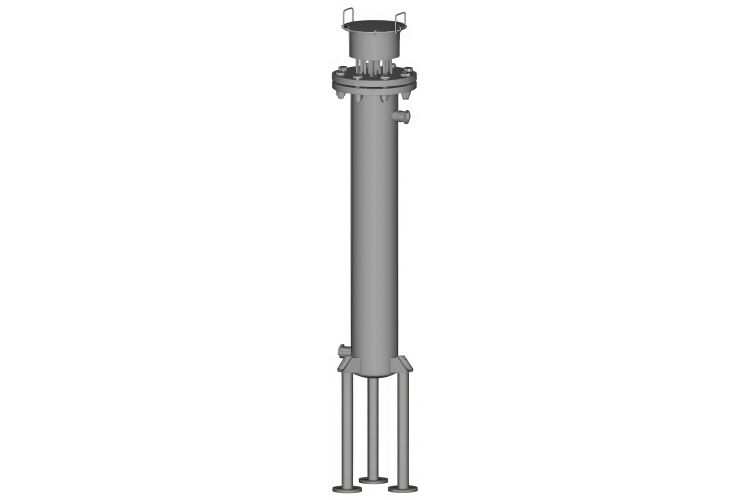
Exhaust gases generated during biopharmaceutical manufacturing often carry highly pathogenic microorganisms—such as viral aerosols and bacterial spores—posing significant biosafety risks. If released untreated, these agents could lead to disease transmission, environmental contamination, and threats to human health.
To address this critical challenge, we have developed an electrically heated Pathogen-Containing Exhaust Air Inactivation System. Utilizing high-temperature thermal sterilization at 300–800°C, the system physically destroys microbial structures through purely thermal means, ensuring safe exhaust emission and full compliance with national biosafety regulations.
Specifically engineered for the biopharmaceutical industry, this system is suitable for:
Fermentation off-gas treatment
Exhaust from sterilization chambers of bioprocessing equipment
Off-gas from biochemical wastewater treatment systems
It achieves a microbial inactivation efficiency exceeding 99.99%, far surpassing the requirements for high-containment laboratory exhaust treatment stipulated in China’s Biosecurity Law, delivering a safe and reliable solution for biopharma enterprises.
Core Product Advantages
1. High-Temperature Sterilization Reliability
The system employs a 300–800°C adjustable high-temperature sterilization process, directly heating exhaust gas via electric heating elements. Inactivation efficacy is validated using the F₀-value method, guaranteeing complete microbial kill.
High-temperature sterilization works by denaturing proteins and degrading nucleic acids—key biological macromolecules—thereby irreversibly inactivating pathogens.
Inactivation Mechanisms:
1.Bacteria: High temperature denatures proteins, ruptures cell membranes, and deactivates enzymes, resulting in bacterial death.
2.Viruses: Heat breaks chemical bonds in viral DNA and RNA, rendering genetic material nonfunctional and achieving complete viral inactivation.
3.Efficacy: At 800°C, only 1 second of residence time is required to achieve >99.99% viral inactivation, fully meeting the requirements of the “Technical Specifications for Disinfection in Medical Institutions.”
2. Intelligent Automated Control System
Equipped with a PLC-based fully automatic control system and a touchscreen HMI, the unit enables unattended, fully automated operation—significantly reducing manual intervention and operational costs.
Automation Features:
1.Precise Temperature Control: PID algorithm ensures temperature stability within ±1°C of the setpoint.
2.Real-Time Monitoring: Continuously tracks temperature, pressure, and gas flow rate; all data recorded in compliance with GMP ALCOA+ principles (Attributable, Legible, Contemporaneous, Original, Accurate + Complete, Consistent, Enduring, Available).
3.Remote Monitoring: Supports Modbus RTU (RS-485) interface for integration into plant-wide SCADA systems, enabling remote parameter adjustment and status queries.
4.Self-Diagnostic Fault Detection: Features a three-tier safety interlock system that automatically detects and responds to anomalies.
5.Role-Based Access Control: Administrators can modify all parameters; operators can only view system status or trigger emergency protocols.
3. Fully Sealed Safety Design
The system features a hermetically sealed architecture, ensuring the entire process—from exhaust collection to treated emission—is fully enclosed. This prevents any microbial leakage, safeguarding personnel and the environment.
Sealing & Safety Features:
1.Negative-Pressure Collection: Exhaust is drawn through negative-pressure piping during collection to prevent pathogen escape.
2.Gas-Tight Valves & Flanges: Critical junctions use ASME B16.5 standard flanged connections with a leakage rate ≤0.1%.
3.Mirror-Finish Interior: Internal surfaces are crafted from 316L stainless steel with electropolished mirror finish—no dead legs, easy to clean.
4.Explosion-Proof Certification: Complies with ATEX/IECEx explosion-proof standards, suitable for flammable or explosive environments.
5.HEPA Final Filtration: Exhaust outlet fitted with HEPA filter (≥99.999% efficiency for 0.2 μm particles), ensuring safe atmospheric release.

Application Scenarios and Regulatory Compliance
1. Specific Applications
• Biosafety Level 3/4 (BSL-3/4) Laboratory Exhaust Treatment
Handles high-consequence pathogens such as Ebola virus and Bacillus anthracis.
Complies with Article 13 of the “Administrative Measures for Biosafety Environment of Pathogenic Microorganism Laboratories,” requiring both high-temperature inactivation and HEPA filtration.
Operates at 800°C with 1-second exposure—far exceeding the BSL-4 requirement of 72°C for 45 seconds.
Negative-pressure design and HEPA filtration ensure zero leakage of lab exhaust.
• Vaccine Manufacturing – Sterilizer Exhaust Treatment
Treats virus-laden exhaust from vaccine production sterilizers (e.g., inactivated COVID-19 vaccines, rabies vaccines).
Features dual-chamber alternating operation for continuous processing, matching the batch-wise emission profile of vaccine lines.
800°C thermal treatment ensures complete cleavage of viral DNA/RNA strands, achieving thorough inactivation per the Biosecurity Law.
Fully enclosed design prevents cross-contamination and maintains cleanroom integrity.
• Fermentation Workshop Exhaust Treatment
Applicable to off-gas from antibiotic fermentation, recombinant protein production, etc.
High-temperature zone inactivates microbes while simultaneously aiding in VOC decomposition—enabling integrated waste gas management.
Handles high-flow, high-humidity exhaust streams typical of intermittent fermentation operations.
Intelligent control system auto-adjusts operating parameters based on real-time gas concentration to maintain stable performance.
• Wastewater Treatment Plant Exhaust Treatment
Treats microbe-laden off-gas from pharmaceutical wastewater plants (e.g., biogas, hydrogen sulfide).
High-temperature inactivation eliminates pathogens while assisting in odorant decomposition, improving ambient air quality.
Explosion-proof design ensures safe operation in potentially flammable wastewater environments.
Complies with GB 18466-2005 “Discharge Standard of Water Pollutants for Medical Organizations” regarding microbial control in exhaust gases.