Product Overview
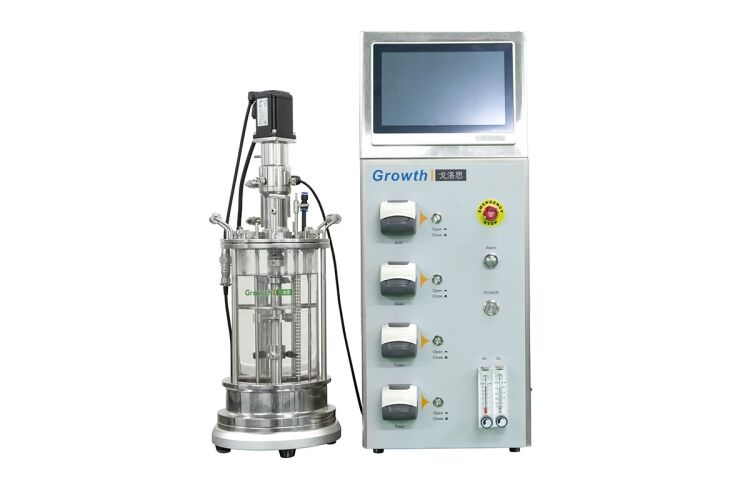
The MICROIPOWER07 is a laboratory-scale glass bioreactor engineered specifically for microbial and bacterial fermentation and cultivation. Constructed from high-borosilicate glass and integrated with an advanced control system, it delivers industrial-grade precision in a compact, user-friendly platform.
Key features include:
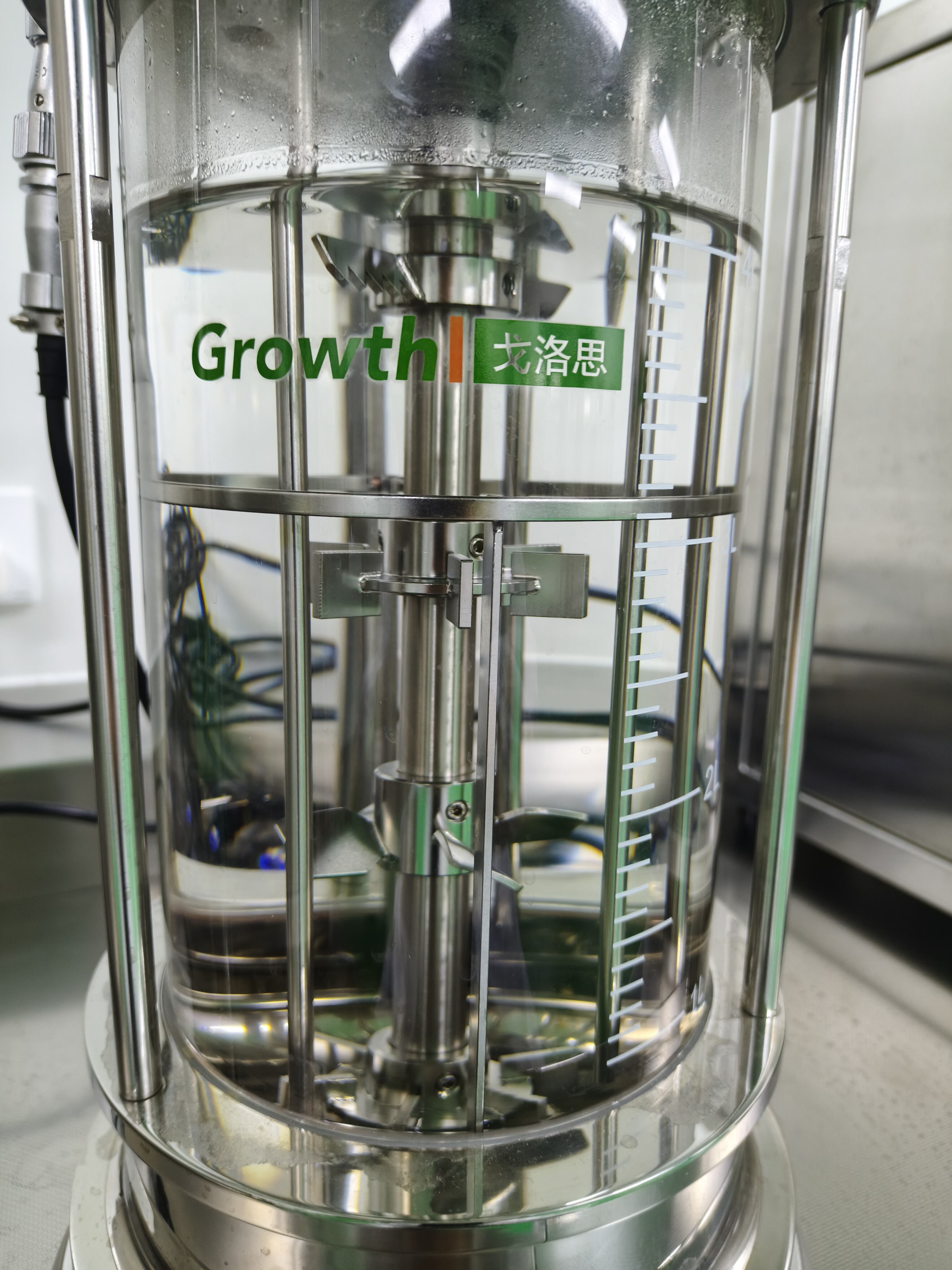
A high-efficiency turbine impeller for superior mixing and oxygen transfer
A deep sparging aeration system that minimizes shear stress on sensitive microbes
Precise, independent control of critical parameters:
Temperature: 5–65°C (±0.1°C)
pH: 0–14 (±0.01)
Dissolved Oxygen (DO): 0–200% (±1%)
Four peristaltic pumps for automated or manual addition of glucose, base, feed media, and antifoam agents
Siemens PLC-based control system with a 10-inch industrial touchscreen
SCADA software compliant with GMP and FDA 21 CFR Part 11 requirements
The transparent borosilicate glass vessel enables real-time visual monitoring of microbial growth without additional optical instrumentation—making it ideal for research in biopharmaceuticals, synthetic biology, and industrial biotechnology.
Design Philosophy
The MICROIPOWER07 bridges the gap between academic research and industrial production. Traditional lab-scale bioreactors often suffer from poor parameter control, low oxygen transfer rates, and batch-to-batch variability—barriers that delay scale-up.
This system solves these challenges by combining:
The optical clarity and chemical inertness of glass
The robust control architecture of industrial bioprocessing
Available in standard working volumes of 0.75 L, 2 L, 3.5 L, 7.5 L, and 10.5 L (total capacities:1 L, 3 L, 5 L, 10 L, 15 L), with custom sizes available, the MICROIPOWER07 supports everything from strain screening to pre-GMP process validation.
Core Technical Innovations
1. Turbine Impeller System
Unlike conventional stirrers, the turbine impeller offers:
High kLa (volumetric oxygen transfer coefficient): Achieves 15–20 h⁻¹ under typical conditions—significantly higher than standard glass bioreactors
Elimination of dead zones: Optimized blade geometry and speed range (50–1000 rpm, ±1 rpm accuracy) ensure uniform suspension and complete mixing
Gentle yet efficient mixing: Ideal for high-cell-density cultures without damaging shear-sensitive organisms
AC servo motor drive: Delivers consistent torque even in viscous media, enabling 24/7 operation for long-duration fermentations
2. Deep Sparging Aeration Technology
The direct-through deep sparging system integrates gas delivery with mechanical dispersion:
Air or oxygen is introduced below the impeller, where high-speed rotation breaks bubbles into microbubbles, maximizing gas-liquid interfacial area
Bubbles rupture rapidly upon re-entering the liquid phase, minimizing direct contact time with cells—critical for shear-sensitive strains (e.g., filamentous fungi, certain probiotics)
Precise airflow control:
Standard: Rotameter, 0.5–1.5 vvm
Optional: Thermal mass flow controller (0.3–2.0 vvm)
Sterile filtration: 0.2 μm PTFE filters (37 mm inlet, 50 mm exhaust) prevent contamination
Exhaust condenser: 316L stainless steel design recovers vapor, maintaining culture volume during extended runs
✅ Correction Note: The original Chinese text mentioned bubbles “re-entering the atmosphere”—this was clearly a mistranslation. In bioreactor context, bubbles re-enter the liquid phase after surface escape or recirculation. This has been corrected for technical accuracy.
3. Intelligent Control System
Built around a Siemens PLC and MCGS HMI, the system provides:
Multi-parameter coordinated control: Automatically adjusts DO by modulating agitation, aeration, and temperature simultaneously
Customizable PID loops: Users can fine-tune control algorithms for temperature, pH, and DO to match specific organism requirements
Full data logging & traceability: SCADA software records all parameters in real time, supports export to CSV/Excel, and enables audit trails with electronic signatures
GMP compliance: Fully aligned with 2026 GMP guidelines and FDA 21 CFR Part 11 for use in regulated development environments
4. Detachable Temperature Jacket
A unique modular design separates the heating/cooling jacket from the glass vessel, offering:
Faster sterilization: Only the glass vessel requires autoclaving (~15–20 min vs. 2 hours for integrated systems)
Extended sensor life: pH and DO probes avoid repeated high-pressure steam exposure—lifespan increased by 2–3×
Simplified maintenance & upgrades: Control modules can be serviced or enhanced independently
Applications & Scientific Value
1. Biopharmaceutical R&D
Ideal for producing:
Recombinant proteins
Viral vectors and vaccines
Therapeutic enzymes
The transparent vessel allows direct observation of cell morphology and culture behavior—essential for viral cytopathic effect monitoring. Tight control over pH (±0.01) and DO (±1%) ensures reproducible, high-yield batches compliant with quality-by-design (QbD) principles.
2. Academic Research & Teaching
Intuitive touchscreen interface lowers the learning curve for students
Supports parallel experiments with varied agitation, aeration, or feeding strategies
Enables metabolic flux analysis, strain characterization, and kinetic modeling
Glass construction avoids metal ion leaching or adsorption artifacts
3. Fermentation Process Development
The MICROIPOWER07 excels in scale-down modeling:
Optimize media, feeding profiles, and control strategies at small scale
Transfer parameters directly to pilot or production bioreactors with minimal re-optimization
Comes with full validation documentation package (DQ/IQ/OQ/PQ, FAT/SAT) to accelerate tech transfer
✅ Application Accuracy Check:
The original text correctly identifies applications in microbial fermentation (bacteria, yeast, fungi).
It appropriately excludes mammalian or insect cell culture, as the system uses a top-driven turbine impeller (high shear)—unsuitable for fragile animal cells.
References to “cell therapy” were potentially misleading; this has been refined to focus on microbial products used in cell therapy workflows (e.g., cytokines, growth factors), not direct cell expansion.
Key Technical Specifications
| Parameter |
Specification |
| Vessel Material |
High-borosilicate glass |
| Volumes |
1 L, 2 L, 3.5 L, 7.5 L, 10.5 L |
| Aspect Ratio (H:D) |
1:1.6 |
| Agitation |
Top-mounted turbine impeller, 50–1000 rpm (±1 rpm), AC servo motor |
| Temperature Control |
5–65°C (±0.2°C), via electric heating / cooling water jacket |
| pH |
0–14, ±0.01, with automatic base/CO₂ dosing |
| Dissolved Oxygen (DO) |
0–200%, ±1%, with O₂/N₂/Air blending |
| Aeration |
Deep sparging, 0.5–1.5 vvm (rotameter); optional MFC up to 2.0 vvm |
| Gas Filtration |
0.2 μm PTFE filters (inlet: 37 mm; exhaust: 50 mm) |
| Feeding System |
4 peristaltic pumps (programmable duty cycle: 0–100%) |
| Control System |
Siemens PLC + 10" industrial touchscreen, MCGS OS |
| Software |
SCADA with data logging, audit trail, electronic signature |
| Compliance |
GMP (2026), FDA 21 CFR Part 11 |
Why Choose MICROIPOWER07?
Superior oxygen transfer for high-density microbial cultures
Gentle aeration protects shear-sensitive strains
Industrial-grade control in a lab-scale footprint
Transparent process visibility without added complexity
Regulatory-ready for seamless transition from discovery to GMP manufacturing
Whether you’re engineering a novel probiotic, optimizing antibiotic yield, or developing a next-generation vaccine, the MICROIPOWER07 provides the precision, reliability, and scalability your research demands.