
Why Does Dissolved Oxygen Control Cell Viability in Cell Culture Bioreactors?
DO-Viability Endpoint Effect: Nonlinear Responses Across Air Saturation Thresholds (30% vs. 50% vs. 70%)
Cell viability in a cell culture bioreactor exhibits a nonlinear response to dissolved oxygen (DO), displaying crippling effects below specific thresholds. It has been demonstrated that in air saturation below 50%, cell viability drops significantly, with a 30% air saturation showing 22% viability compared to 50% air saturation (Hanson et al., 2022). Additionally, increasing DO from 50% to 70% air saturation leads to negligible increases in viability, with a reported increase in cell viability of less than 5%, while producing a concomitant increase in oxidative stress. This suggests that there exists a small optimal window of air saturation set between 40% and 60%, where the maximum viability of the cells is achieved with minimal risk of metabolic imbalance.
DO Set Point Relative Viability Metabolic Impact
30% ⬇️ 78% Severe hypoxia, ATP depletion
50% ⬆️ 95–100% Balanced respiration
70% ⬇️ 92–97% Elevated ROS, DNA fragmentation
If the DO level remains in the target optimal range of 40%-60%, this prevents an energy crisis and free-radical damage.
Physiological Basis: Hypoxia-Mimicking DO (4–10% O₂)
DO levels that mimic hypoxia of 4–10% O₂ (8–20% air saturation) are equivalent to the oxygen levels that are present in tissues. Hypoxia-inducible factors (HIFs) are activated, and cell metabolism is altered to enhance glycolytic and antioxidant functions and decrease ROS by 40% compared to a normoxic state (Semenza et al., 2021). Critically, mitochondrial respiration is fully sustained, with cell viability and cell metabolism being enhanced, and lactate levels being lowered. The result is metabolic balance, where oxygen supply meets demand, avoiding hypoxic cell death and hyperoxic cell death.
Perceptive DO Control Strategies:\n\nDO Sensors: Optical vs. Polarographic\n\nOptical sensors record dissolved oxygen levels (DO) reliably within ±1% air saturation with minimal drift and calibration requirements. Polarographic probes remain a cheaper yet less reliable option as they drift between 2% and 5% and require recalibration 50% more. These recalibrations introduce a high risk of contamination as nutrient medium is often lost, resulting in a stress level of 15% viability. DO Sensors have proven to be reliable and support DO control vital for sustaining the integrity of valuable cell lines for controlled bioprocessing.\n\nClosed Loop Control: DO + Gas Flow Control \n\nDO Control will continue to adapt as bioprocessing evolves. An industrial standard PID control accommodates rapid shifts in DO. Improvements in speed and control can be seen when during exponential growth, biomass levels determine a DO Setpoint. Biotech Control Journal (2023) indicates a threefold increase in oxygen transfer as other parameters remain constant and viability decreases by less than 5%.
Maximizing Oxygen Transfer Efficiency: KLa Optimization in Cell Culture Bioreactors
Influences of Rocking Rate, Angle, and Fill on Mass Transfer and Viability in Single-Use Bioreactors
In the case of single-use cell culture bioreactors, KLa (the volumetric mass transfer coefficient of oxygen in a liquid) is determined by rocking dynamics as opposed to mixing. Rocking rate, angle, and fill volume interact in a non-linear manner to influence liquid oxygen supply, as well as the mechanical stress to which the cells are exposed.
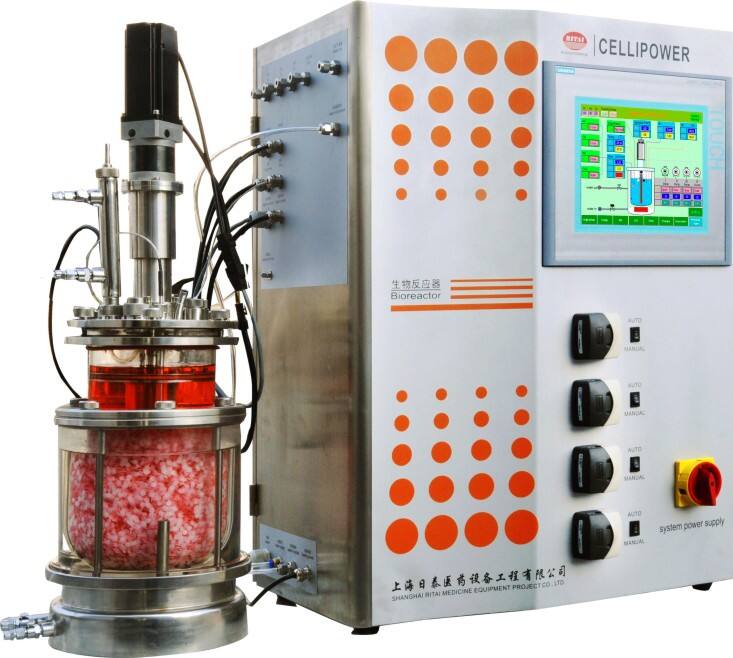
- A rocking rate increase correlates with an exponential increase in KLa and therefore, oxygen supply, due to increased surface aeration. However, at rates greater than 25 rpm, the generated hydrodynamic shear results in cell viability loss (15 – 30%) for cell lines that are sensitive to shear.
- A greater rocking angle (7° - 12°) also correlates with an increase in the gas-liquid surface area. However, this increase requires strict control over fill volume, since excessive fill volume (> 40%) suppresses surface renewal, while underfilling (<20%) increases mechanical stress on cells.
- Empirical studies show that a rocking angle of 15° - 20° at a rate of 15-20 rpm, combined with a fill volume of 30-35%, consistently results in KLa values of 4 - 10 h⁻¹, maintaining cell viability above 90%.
It should be noted that small changes demand larger corrective actions. For example, a fill volume decrease of 10% requires a rocking rate increase of 5 - 8% to achieve the same KLa.
There is a direct cost of misalignment; a Ponemon Institute study from 2023 reported an average loss of $740,000 per batch for failures related to poor KLa optimization.
FAQ
Q: What is the optimal dissolved oxygen level for cell viability in a bioreactor?
A: The optimal level of dissolved oxygen in a bioreactor is 40 – 60% air saturation. Levels above 60% can result in cell death due to the formation of excessive
Q: How do the advantages of optical sensors compare to those of polarographic probes for dissolved oxygen monitoring?
A: When comparing dissolved oxygen monitoring with the two methods, optical sensors are much more effective. Their measurement accuracy is within 1%, and drift rates are about 0.5% per month. Additionally, they need calibration every 6 months. On the other hand, the optical sensors are more expensive. However, the drift rates of polarographic probes are about 2-5% per month, and they need to be recalibrated every week.
Q: Why is rocking rate critical to single-use bioreactors?
A: The rocking rate of single-use bioreactors is the main method of facilitating mass transfer. However, rocking rates that are too high can cause cell damage. This is especially true for suspension cells and cell lines that are more shear sensitive.
Q: What are the benefits of feedforward OTR compensation?
A: Feedforward OTR compensation is beneficial because it ensures that dissolved oxygen levels stay high enough to keep cells growing without restriction. The main drawback of bioreactors is that the cell growth rate can fluctuate a lot. This means that the oxygen levels can drop to dangerous levels without a sufficient supply of oxygen. By measuring the mass