FDA cGMP Considerations: Sterility Assurance and Equipment Qualification for Cell Culture Bioreactors
Process Controls and Risk Management: Sterilization, Leak Testing, and Bioreactor-Specific Qualification
To remain within the framework of the FDA cGMP guidelines, pharmaceutical companies must have validation protocols that are distinct to the company's cell culture bioreactor systems. Using the Bioburden testing validation guidelines of Geobacillus stearothermophilus spores as the validation organisms and/or indicators for USP <1229> or other ISO 14937 guidelines, a steam-in-place (SIP) cycle must attain an SAL of no more than, and a post-sterilization pressure decay maximal breach must be established to validate bioreactor vessel integrity, as even a single breach at 0.5 microns, which is the average breach rate, would be the root cause of an incident and the average cost for industry to remediate each of the breach incidents is approximately $740,000 (Ponemon Institute, 2023).
Bioreactor-specific qualification consists of factory acceptance testing (FAT) as well as three other distinct phases:
1. Installation Qualification (IQ) - inspection of the systems in place, complete with traceables for components.
2. Operational Qualification (OQ) - performance evaluation, for example, temperature regulation within a tolerance of ±0.5oC.
3. Performance Qualification (PQ) - evaluation to confirm reproducible performance under bioreactor use conditions.
Human interventions in bioreactor operations—mainly due to sampling and material transfers—are responsible for 78% of bioreactor contamination events documented in PDA Technical Report 68 (2022). Usage of different validated aseptic connections that allow for open-system manipulations, such as sterile welders and rapid transfer ports (RTPs), cause an order of magnitude of manipulation within the scope of bioreactor interventions. Up to 90% of contamination risk utilizing automated sampling systems and maintaining sample sterility through steaming-sterilizable systems and pathways, in-line filters to remove sample contamination, and real-time sampling for comprehensive tracing and logging, compared to manual sampling.
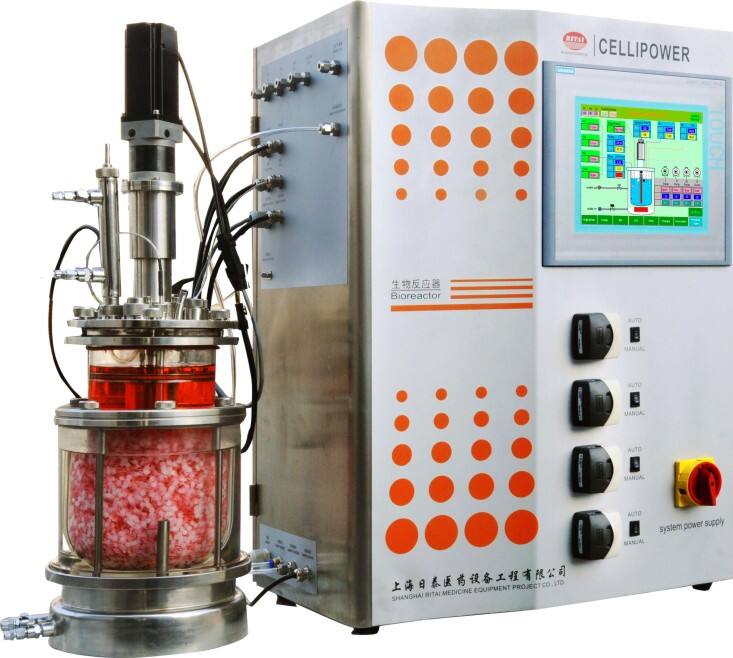
When sampling interventions are concerned—high-rate sampling interventions done during maximum cell density periods—process validation needs to be done and robust design needs to be implemented and sustained throughout the whole production lifecycle.
Cell culture bioreactors comprise a pivotal element of the bioreactor framework. The revised 2022 EU GMP Annex 1 on Contamination Control Strategies (CCS) proposes a bioreactor framework that structures design along a scientific and risk-based approach to contamination control. Bioreactors are heavily stipulated, including multiple robust validations, throughout the framework's design and output, as follows:
Testing the integrity of filters, via ASTM F838-22, on a bioreactor's filtration system, and its ability to retain a 0.2 µm filter, remains in the realm of cyclical production and is mandatory.
Dynamic flow verification employs tracer analytical studies and CFD modeling to determine if mixing and sparging systems keep the medium sufficiently homogeneous with no development of particulates and no biofilm-forming dead zones.
This integrated approach moves the focus of compliance out of retrospective environmental assessments into real-time, equipment-based risk controls. Modern single-use bioreactors, for example, have built-in pressure transducers and automated logging in place to support continuous assurance, and a 40% decrease in the risk related to human interventions in open-aseptic processes (EU GMP Annex 1, 2022). The design elements, such as sampling ports in closed systems, fluid paths without joints, and contamination control systems, should be aimed at the outcome of the described spaces wherein contamination through the presence of airborne pollutants during harvest is prevented.
Annex 1 emphasizes that cleanroom bioreactor monitoring is inadequate in the face of the risks specific to bioreactors, including biofilm forming on the wetted surfaces and leachables from the polymer liner. Thus, it is necessary to operate under the presumption of the worst-case utilization scenarios with sustained agitation, temperature excursions, and resting periods, in order to validate control systems for analytical robustness.
Involving Cell-Culture Bioreactor Operations within ISO 14644-1 and EU GMP C/D Requirements
Operational Boundaries for Cell Culture Bioreactors in Aseptic Processing
Cell culture bioreactors can be configured safely for ISO Class 7 (EU GMP Grade C) bioreactor operations, especially for processing fully closed systems involving no ambient exposure during operation, sampling, or transfers.
Preparation of media and buffer solutions (in line/terminal sterile processing) Assembly and
SIP of pre-sterilized and sealed bioreactor systems
Handling of closed sterilized units (equipment) prior to sanitization.
Many operational boundaries must be observed for closed systems: Limitations include ≤ 352,000 particles/m³, ≥ 0.5µm/m³, latency, §175, EU GMP Annex 1 (2022) microbial limits of ≤ 100 CFU/m³, (air) and (≤ 50 CFU) contact plate (surfaces), and latency (during resting state). Total and unilateral separation of systems.
Operation of the bioreactor systems must be closed/confirmed by the manufacturers and “integrity of filter and decay” testing.
Global Harmonization and Audit-Ready Documentation for Cell Culture Bioreactors
The least time, money, and resources are required if a Global Harmonization system, like ICH Q10, is implemented for validation, change control, and documentation requirements for bioreactor operations. In the pharmaceutical industry, Global Harmonization systems simplify the processes of the FDA, the EU, and country-specific regulations. The absence of required testing decreases the time to the market by as much as 40%, and facilitates technology transfers across many regions, as documented by ICH aligned frameworks and the ISPE Good Practice Guide, 2023.
Real-time parameters of the process, the 21 CFR Part 11 batch records, and the documentation for changes and equipment calibration, and maintenance are all contained within an interconnected digital system, thus achieving audit readiness. When combined with a request from the blockchain for an audit, these integrated systems are unparalleled for preserving data and tamper-proof records. Modern facilities use a system that incorporates technology to continuously track deviations and is integrated to perform an automated Root Cause Analysis. The average industry system time is decreased by 35%. The implemented frameworks demonstrate the fully integrated, automated, digitally enabled quality systems which support the EEAT at the time of the audit.
FAQ
What does it mean to be compliant with FDA cGMP for the Bioreactor Cell Culture Industry?
The operations of the bioreactor cell culture maintain product safety and quality. The produce needs to be free of contamination and the operations of the cell culture bioreactors meet the strict criteria for the control of contamination, the qualification of the equipment, and sterility.
What is the importance of conducting a pressure decay leak test on a bioreactor?
Conducting a pressure decay leak test is the only means to safeguard the sterility of the cell culture process by continuously assuring the integrity of the containment vessel.
What are the components of bioreactor equipment qualification?
There are three components, including Installation Qualification (IQ), Operational Qualification (OQ), and Performance Qualification (PQ). These are concerned with the assembly of the bioreactor, the operation of the bioreactor, and the bioreactor's results of production.
What are Contamination Control Strategies (CCS) in the context of the EU GMP Annex 1?
CCS relies on both scientific and risk methods of evaluating bioreactor function with the goal of minimizing the probability of contamination in cell culture.
When might a fully closed bioreactor require only an ISO Class 7 (Grade C) clean room?
When a fully closed bioreactor never comes into contact with the exterior environment for the purpose of sampling, transfer, or operation, only an ISO Class 7 (or Grade C) clean room is sufficient.