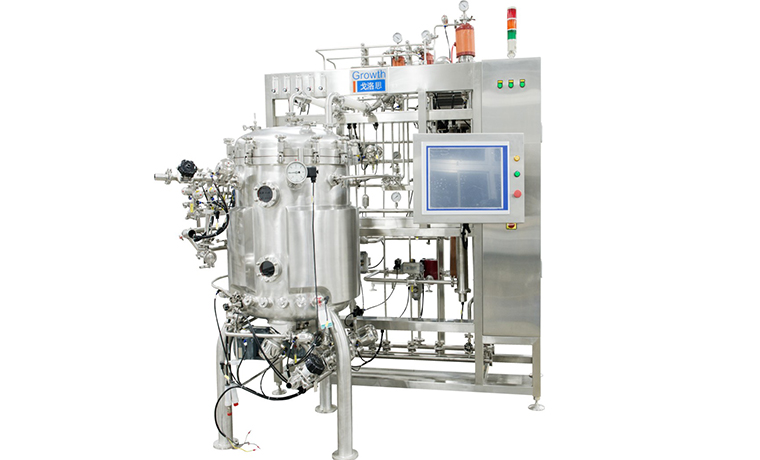
The Cultured Meat Bioreactor: Purpose Built for Scalable, Controlled Cell Growth
Limitations of Traditional Fermentation for Culturing Mammalian Cells
Mammalian cell culture and traditional bioreactors designed for microbial fermentation are fundamentally incompatible. Animal cells lack the protection of rigid cell walls and are much more fragile than yeast or bacteria. They are also sensitive to environmental changes and require a stable environment. Extreme perturbations such as membrane rupture and shear stress above 0.5 Pa are not tolerated. They also require a specific and stable gas saturation in the medium as well as a constant nutrient supply. Conventional fermentation systems use high shear mixers which create excess turbulence. They also suffer poor gas transfer, trapping metabolites such as lactate and ammonia which causes rapid cell death and degradation of the tissue. This mismatch of engineering design and biological systems illustrates the need for, not just bioreactors, but purpose-built bioreactors for cultured meat such as fermenters.
Key functional components: cellular oxygenation, nutrient supply, waste removal, and protection from shear stress.
Cultured meat bioreactors contain four primary, essential interdependent functions, which in tandem allow for the sustained culture of high-density, highly metabolic cellular activity in mammals.
Function: Oxygen transfer
Challenge: Oxygen diffusion through the culture medium is poor
Engineering solution: Micro-spargers in combination with real-time dissolved oxygen probes.
Function: Nutrient delivery
Challenge: The culture is highly dense which causes rapid nutrient supply depletion.
Engineering solution: Peristaltic perfusion systems.
Function: Waste removal
Challenge: Ammonia and lactate wastes accumulate
Engineering solution: In-line filtration and automated waste removal.
Function: Shear protection
Challenge: Cell collectivity and fragility, and turbulence
Engineering solution: Low shear impellers, cuffs, and designs that favor laminar flow.
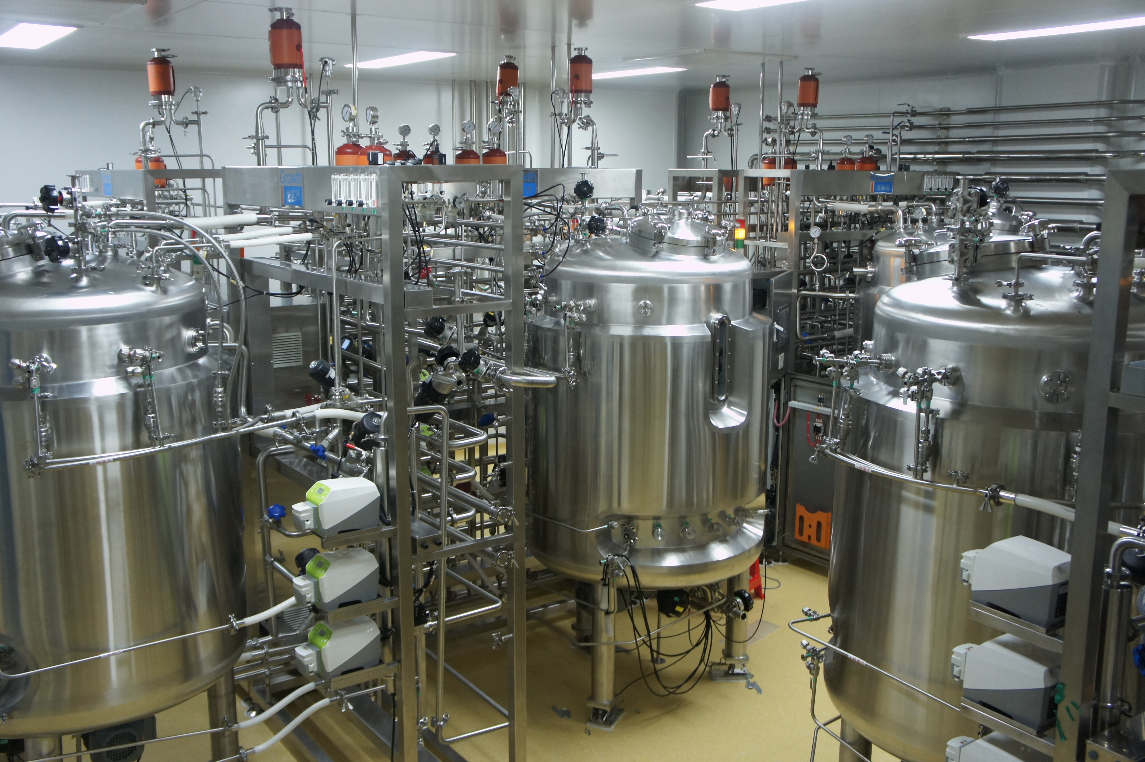
These systems and components consistently maintain > 95% cellular viability and support culture systems with cell densities over 50 million cells/mL, which is essential for a commercially viable, cost competitive product.
Trade-Offs in Commercial Scalability of Cultured Meat Bioreactor Types
Stirred-Tank Bioreactors: Industry Standard with kLa and Shear Management Problems
Biotechnology’s current industry standard for large-scale bioprocessing is stirred tank bioreactors (STBs). This is largely due to the scalability and familiarity of the processes involved, in addition to their strong transfer of mass quantified by the volumetric mass transfer coefficient (kLa). This is, however, compromised by the use of mechanical agitation and the problems it poses for mammalian cells. For young bovine myoblast cells, cell viability was shown to decrease by greater than 25% due to local shear hotspots present near the impellers in the bioreactor for cell culture volumes of 500 L and above. Microcarrier surface modifications and marine-blade impellers have helped with cell viability, but the required power input has been shown to increase non-linearly with large volumes scales. On top of this, each 10-fold increase in bioreactor volume requires approximately 22% more power input to avoid poor mixing and oxygen gradients. For stirred tank bioreactors (STBs), extensive engineering of the system makes this economically infeasible for bioprocessing of cells.
Perfusion and Fixed-Bed Systems: Enabling High-Density Adherent Culture at Scale
Perfusion bioreactors use immobilized cell systems organized on scaffolds or microcarrier and continuously circulated, fresh media, yielding cell densities over 10⁸ cells/mL, five times that of fed-batch systems, and avoiding shear constraints. Fixed-bed systems using food-grade, edible scaffolds aid in structuring tissue while minimizing the buildup of metabolic waste. However, the challenge of scale presents specific limitations:
Media consumption increases 30–40% as compared to fed-batch reactors, translating to higher operating costs
Increased complexity in sterilization leads to longer downtime and increases the burden for validation
In beds over 40 cm, radial gradients promote heterogeneous cell growth
Harvesting of tissue architectures that remain intact is still a technical challenge
Perfusion technology is FDA-approved for the commercial production of cultured meat. However, its adoption is dependent on balancing CAPEX in relation to product value, sterility, and compliance to the regulation of food-grade manufacturing.
Analysing Response Gaps Between Engineering Solutions and Large Scale Meat Growth Models
Non-Linear Assessment of Mixing, Oxygen Transfer (kLa), and Thermal Homogeneity Beyond 1,000 Units
Increasing the size of bioreactors used to grow cultured meat beyond a size of 1,000 liters reveals critical, nonlinear engineering challenges. Oxygen transfer (kLa) shows inefficient scaling–doubling bioreactor size while maintaining a desired level of dissolved oxygen requires a four-fold increase in power input. In addition, as the size of the bioreactor grows, thermal homogeneity falls apart. Surface cooling is no longer sufficient for the size of the bioreactor, and there are intra-tank temperature differentials of over 2 ° C in tanks are greater than 10,000 L. Mixing inertia is also worsened and there are nutrient depleted “dead zones” where pH and metabolite concentrations drift engineer into a toxic zone. This can increase the costs associated with operating a specific facility by almost $740k a year (Cultivarian 2025). Confirmed constraints include:
Oxygen Transfer: Sparging is less efficient by 40-60% in bioreactors that are larger than 5,000 L
Heats Management: Temperature differentials in >10,000 L sized tanks are > 2 °C
Mixing Inertia: Impeller delay is > 0.8 pH units
Cell-Specific Sensitivities: Myosatellite Viability Limits Under Hydrodynamic Stress
Cultured muscle tissue is predominantly made of Myosatellite cells. These cells are very hydrodynamic stressed. The viability reduces by 30-50% when exposed to shear stresses in the range of 1.5 Pa. This is the shear stressed that is normally experienced in the impeller wake of large stirred tanks. This cell viability must be designed with consideration to a constant uniform flow and not a turbulent mixing:
Laminar Flow Design: Use of geometric design in cell chambers to control flow and allow cells to be at the center of the flow eliminating eddy currents
Design of shear protective medium: shear protective medium that are polymeric in nature- such as Poloxamer 188 which is used in FDA-regulated processes.
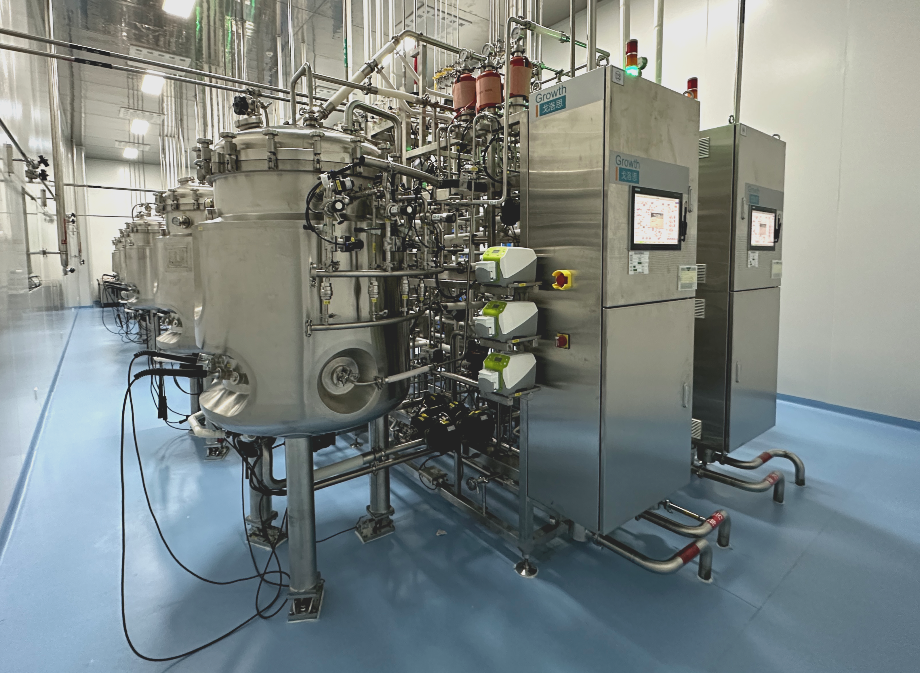
Non-Agitation Operation: The use of closed perfusion to continuously exchange media to control the concentrations of ammonia and lactate is an aggressive, yet, high energy input.
Mammalian cells possess no permeable cell walls. As a result, these cells are very susceptible to damage due to mechanical stress and this damage can occur to cell structures at very low energy input of less than 50 W/m³.
In the context of bioreactor design for cultured meat, biological realities consider agitation a liability, not an asset.
Validation in the Real World: Performance Benchmarks and Bioreactors for Cultured Meat, Approved by the FDA
The approval of line extensions for cultured meat production is the ultimate proof of bioreactor readiness and the engineering of systems that meet safety, scalability, and consistency thresholds. Approved sites report cell densities greater than 50 million/mL, 60-day production cycles, and sterility maintained under ISO Class 5 cleanroom conditions. These sites report an 80% reduction in water use relative to conventional livestock farming, thus providing empirical evidence to enhance the claims of sustainability. Operational benchmarks indicate that optimized perfusion platforms reduce effective media costs to less than $1 per liter due to high cell density, low waste, and extended media residence time. All of the above certifies the claim that purpose-built bioreactors for cultured meat production, based on mammalian cell biology, and supplemented with food-grade engineering, have moved from theoretical promise to commercially viable and compliant production.
FAQ
What are the primary obstacles that conventional bioreactors encounter in the production of cultured meat?
The primary reason conventional bioreactors are incompatible with mammalian cell culture is that these systems cannot provide the precise and controlled environment that mammalian cells require.
In what ways do cultured meat bioreactors overcome the obstacles associated with mammalian cell culture?
Such bioreactors incorporate design features including micro-spargers for improved oxygen transfer, peristaltic perfusion systems for nutrient delivery, and low-shear impellers to maintain the integrity of the cell membranes.
Why are stirred-tank bioreactors less than ideal for producing cultured meat?
Stirred-tank bioreactors create high shear stress that can damage mammalian cells, especially when working with larger volumes. They are also less operationally cost efficient due to the large energy requirements at a larger scale.
Why are perfusion bioreactors preferable to other bioreactors for cultured meat production?
Perfusion bioreactors allow for a constant supply of fresh media which results in reduced shear stress, and the ability to work with high cell densities. The main drawbacks are the media consumption and intensive sterilization.
What are the challenges with scaling bioreactors for cultured meat production?
When scaling bioreactors for cultured meat, the main challenges are oxygen transfer, thermal control, mixing, and maintaining a homogeneous cell suspension to ensure cell viability.
What is the significance of FDA approval for cultured meat bioreactor design?
FDA approval demonstrates that a bioreactor design prioritizes safety, scalability, and consistency and that it has met the design requirements to support commercial production and regulatory-compliant production.