In global public health, vaccines have always been the critical barrier guarding human health. From eradicating smallpox to containing polio, their achievements are self-evident. However, facing the frequent onslaught of emerging infectious diseases, the long production cycles of traditional vaccines, and their reliance on cold-chain transportation, the industry is in urgent need of technological innovation. Today, the rise of synthetic biology is injecting new vitality into the vaccine industry. Combining the systematic thinking of "Design-Build-Test-Learn" (DBTL) with upgrades in core equipment like bioreactors, it is solving the puzzle of sustainable production and ushering in a new era of vaccine R&D and manufacturing.
Synthetic Biology + Bioreactors: The "Dual Efficiency Engines" of Vaccine Production
01 The Synthetic Biology DBTL Cycle: Designing Candidate Vaccines
Traditional vaccine R&D is often constrained by a passive model of "finding antigens - testing processes - waiting for results," which can take years or even decades to move a new vaccine from the lab to the production line. Synthetic biology offers an "active design" solution that, when combined with technological advancements in bioreactors, is transforming this landscape.
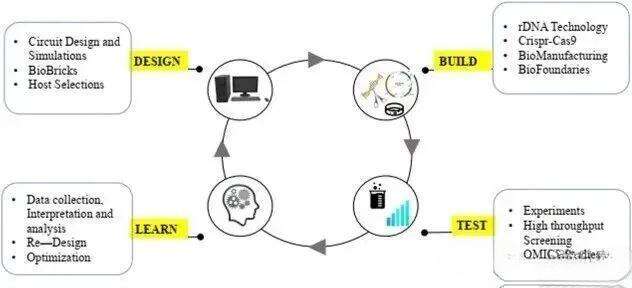
The core of synthetic biology—the DBTL cycle (Design-Build-Test-Learn)—provides a precise "blueprint" for vaccine R&D: potential antigens are screened via computer simulation, synthetic circuits are constructed using genetic engineering, and high-throughput testing is completed in a Biofoundry.
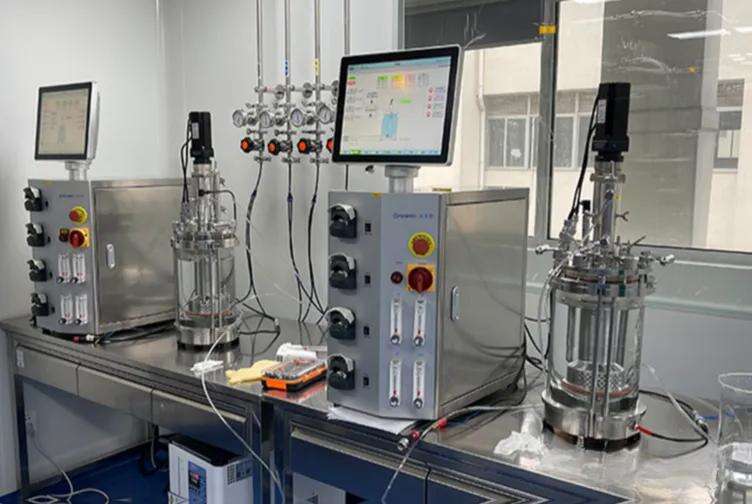
The bioreactor is the key carrier that turns this "blueprint" into a "product." Particularly, stainless steel fermenters, with their high temperature resistance, corrosion resistance, and ease of cleaning, are the core equipment for large-scale vaccine production. They precisely control critical parameters such as temperature, pH value, and dissolved oxygen, providing a stable environment for the efficient cultivation of engineered bacteria or cells, ensuring high yield and quality of synthetic vaccine components (such as recombinant proteins and virus-like particles).
Take mRNA vaccines as an example. Traditional processes relying on chicken embryo culture could take months just for preparation. While mRNA vaccine production based on synthetic biology can rapidly synthesize RNA fragments through in vitro transcription (IVT), the subsequent purification and formulation still rely on bioreactors for sophisticated processing.
02 The Bioreactor: The "Key Converter" for Synthetic Biology Implementation
In the technical system of synthetic biology, the bioreactor is by no means a simple "container," but the central hub for transforming "designed functions" into "actual products."
Synthetic biology uses gene editing and metabolic pathway modification to construct engineered bacteria or cells with specific functions (such as yeast cells that efficiently express antigens or cell-free systems that synthesize RNA). However, the activity and production efficiency of these "artificial biological systems" are highly dependent on the precise regulation of the external environment—this is the core value of the bioreactor.
It provides stable nutrient supply and precise environmental control (such as strict anaerobic/aerobic conditions, constant temperature, and pH) for the "artificial life forms" designed by synthetic biology. It can even optimize metabolic flux distribution and reduce by-product generation through real-time monitoring and feedback regulation, ensuring the successful implementation of artificially designed biological functions.
For instance, in the production of recombinant subunit vaccines, synthetic biology-modified engineered bacteria require high-density culture in a reactor to efficiently secrete antigen proteins. Without the sophisticated regulation of the reactor, the engineered bacteria might become inactive due to environmental stress (such as insufficient dissolved oxygen or accumulation of metabolic waste), causing the design goals of synthetic biology to fail. It can be said that without the technical support of bioreactors, the "innovation blueprints" of synthetic biology cannot be transformed into large-scale, high-quality vaccine products.
03 Parallel Technological Paths: Synthetic Biology Reshapes Vaccine Categories
Beyond mRNA vaccines, synthetic biology is driving the upgrade of multiple vaccine types, covering scenarios from infectious disease prevention to tumor therapy, and solving the pain points of traditional vaccines such as "insufficient safety" and "lack of specificity."
Virus-like Particle (VLP) Vaccines:
In the field of viral vector vaccines, synthetic biology achieves both "safety" and "efficiency." Traditional live attenuated vaccines can trigger strong immune responses but carry the risk of reverting to pathogenicity. VLPs, however, use synthetic biology to remove the viral genome while retaining its immunogenic structure, avoiding infection risks while accurately presenting antigens. For example, COVID-19 VLP vaccines use recombinant engineering to self-assemble viral structural proteins without involving live viruses, significantly improving safety and shortening the production cycle to 12-14 weeks.
Tumor Therapeutic Vaccines:
For cancer treatment, synthetic biology has achieved a breakthrough in "precision targeting." Epitope-based tumor vaccines use bioinformatics algorithms to screen for unique antigen epitopes on tumor cells, then link multiple epitopes through synthetic technology to create a multi-epitope vaccine. This vaccine can precisely identify tumor cells, avoid attacking normal tissues, and activate dual immune responses of T cells and B cells. Currently, several multi-epitope tumor vaccines for lung cancer and melanoma are in clinical trials, offering new directions for cancer immunotherapy.
Emerging Categories:
Synthetic biology also supports emerging categories like phage vaccines and DNA vaccines. DNA vaccines use synthetically optimized plasmid DNA to express antigens directly in vivo, eliminating the need for in vitro culture. Phage vaccines display antigens on the phage surface, triggering both humoral and cellular immunity, and show great potential in combating antibiotic-resistant bacterial infections.
04 Sustainable Development: The Long-Term Value of Synthetic Biology
The "sustainability" of the vaccine industry refers not only to improved production efficiency but also to resource utilization, cost control, and global equity. In these dimensions, synthetic biology is driving the industry toward a greener and more inclusive future.
Resource Efficiency:
Traditional vaccine production relies on large numbers of living cells (such as mammalian cells or chicken embryos), consuming massive energy and culture media, and generating significant waste. Synthetic biology-enabled cell-free production systems synthesize vaccine components through in vitro enzymatic reactions without maintaining cell viability. This reduces energy consumption by over 30%, and the products are highly pure and easy to purify, minimizing resource consumption in subsequent processing. For example, producing the hepatitis B virus core protein in a cell-free system allows rapid assembly into VLPs, with production efficiency 2-3 times that of traditional recombinant DNA technology.
Cost Control:
Synthetic biology reduces R&D costs through standardized components. Automated equipment in Biofoundries can test thousands of synthetic circuits simultaneously, drastically reducing labor input. The reusability of "platform technologies" allows one production system to adapt to multiple vaccines—for example, the same IVT technology used for COVID-19 mRNA vaccines can be quickly switched to produce influenza or shingles vaccines, spreading equipment and R&D costs and making vaccines more affordable.
Global Equity:
Synthetic biology is breaking the "vaccine gap." The Developing Countries Vaccine Manufacturers Network (DCVMN) is leveraging synthetic biology to enable small and medium-sized manufacturers to master modular production capabilities. Without building massive factories, they can achieve local vaccine production by sharing design tools and production schemes from Biofoundries. This means that in the future, facing emerging infectious diseases, low-income countries will not need to wait for aid from developed nations but can start production independently, truly achieving global in vaccine accessibility.
05 Challenges and the Future: How Can Synthetic Biology Go Further?
Despite the revolutionary changes synthetic biology brings to the vaccine industry, it still faces numerous challenges. Currently, long-term safety data for most synthetic vaccines is still accumulating—for example, the long-term immune persistence of mRNA vaccines and the potential off-target effects of epitope vaccines require more clinical research. Additionally, synthetic biology relies on complex genetic engineering, and its ethical and regulatory frameworks are not yet fully mature. Balancing technological innovation with biosafety remains a global challenge.
Furthermore, the "broad-spectrum" effectiveness of synthetic vaccines needs improvement against highly variable viruses like HIV and influenza. These viruses mutate rapidly, and traditional vaccines often target a single strain, struggling to cope with new variants. In the future, the combination of machine learning and synthetic biology may lead to "pan-virus vaccines"—by predicting viral mutation trends and designing antigen sequences covering multiple subtypes, vaccines could achieve "one vaccination, long-term protection."
In the longer term, synthetic biology will push the vaccine industry into a "personalized era." By integrating genomics and immunomics data, vaccine dosages and formulations can be customized for different populations (such as the elderly or immunocompromised individuals). It may even be possible to design exclusive tumor vaccines based on an individual's specific cancer mutations, realizing "one-person-one-strategy" precision medicine.
06 Conclusion
From emergency responses to the COVID-19 pandemic, to the prevention of daily infectious diseases, and breakthroughs in tumor therapy, the "dual-engine" combination of synthetic biology and bioreactors is reshaping the underlying logic of the vaccine industry. They not only solve the pain points of traditional vaccines—being "slow, expensive, risky, and polluting"—but also build a sustainable production ecosystem that is "localized, green, and personalized."
As technology continues to iterate, the future vaccine industry will no longer be limited by centralized factories and cold-chain transportation. Instead, it will be able to reach deep into communities and serve the globe, truly realizing the public health vision of "ensuring everyone can timely access safe vaccines"—this is the ultimate value of the collaborative innovation between synthetic biology and bioreactors.