Driven by globalization and the overuse of antibiotics, bacterial resistance has escalated from a clinical challenge into a global public health crisis. Plasmids carrying resistance genes spread across continents via trade, travel, and medical networks, while multidrug-resistant strains migrate from hospitals into communities. As our traditional "last-resort" antibiotic reserves are depleted, peptide drugs have emerged as a promising alternative. However, traditional chemical synthesis of peptides faces significant bottlenecks. The rise of microbial fermentation technology is not only reshaping the production paradigm of peptide drugs but also building a dynamic defense system against the evolution of resistance, offering new hope for the post-antibiotic era.
1. Inherent Limitations of Traditional Chemical Synthesis
The technical shortcomings of chemically synthesized peptide drugs are particularly pronounced in the face of antibiotic resistance. Stepwise synthesis inevitably leads to the accumulation of by-products, which pose immunogenic risks when administered systemically. Furthermore, as peptide chains lengthen, the probability of β-sheet formation and aggregation increases, significantly raising purification difficulties and solvent consumption.
Repeated deprotection steps during synthesis leave amino acids like cysteine and methionine vulnerable to oxidation, interfering with the correct pairing of crucial disulfide bonds and hindering the formation of the drug's active structure. Additionally, the strong hygroscopicity of some synthetic peptides creates challenges for formulation processes such as sterile filtration and lyophilization, further restricting industrial applications.
Most critically, the long cycle and high cost of sequence optimization in chemical synthesis make it difficult to adapt to the rapid evolution of drug-resistant bacteria. Once a resistant strain appears clinically, the entire synthesis route must be redesigned—requiring the screening of protecting groups, optimization of coupling conditions, and adjustment of purification methods. The validation process for the entire supply chain is time-consuming and laborious, causing the speed of drug iteration to fall far behind the pace of bacterial evolution. Moreover, the risk of supply chain disruptions (e.g., the discontinuation of reagents or chromatography media) can directly halt production, threatening the continuous supply of essential drugs.
2. Core Technical Advantages of Microbial Fermentation01 An Efficient and Low-Cost Production System
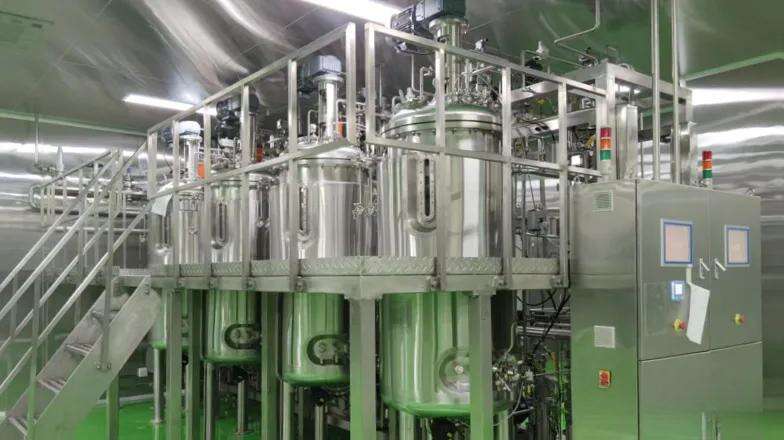
Microbial fermentation utilizes genetically engineered strains and the cell's own amino acid metabolism system to synthesize antimicrobial peptides. This eliminates the need for additional protective reagents, reducing impurities at the source. Production strains can secrete the target product directionally, enabling long-term continuous operation and significantly improving efficiency.
In downstream processing, high-purity products can be obtained through simple steps such as fermentation broth filtration and ion-exchange resin capture. The entire process avoids toxic solvents, reducing environmental impact and simplifying the workflow.
Regarding strain preservation and reuse, fermentation technology offers unique benefits. Strains in the logarithmic growth phase, treated with 15-20% glycerol, can be stored long-term at -80°C or in liquid nitrogen. A single 5-liter seed tank culture can yield hundreds to thousands of glycerol stock vials. When revived years later under the same culture conditions, these strains consistently produce products with identical growth curves, yields, and quality—providing a reliability that chemical synthesis cannot match.
02 A Flexible and Rapid Mechanism for Combating Resistance
The "strategic hedge" mechanism built by fermentation technology fundamentally alters the evolutionary race between humans and bacteria. When a resistant strain is clinically isolated, gene editing or directed evolution can quickly rewrite the gene sequence encoding the therapeutic peptide, establishing a new seed bank.
Leveraging existing fermentation platforms and downstream purification processes allows for drug iteration without reconstructing the entire production system. This drastically shortens the R&D cycle, for the first time giving humans a temporal advantage in the fight against resistance.
This flexibility also preserves the residual value of "failed projects." If a candidate antimicrobial peptide is discontinued due to poor efficacy, the engineered strain can be repurposed for a new target or sequence with simple genetic editing. This transforms a single R&D failure into a reusable biological asset, significantly improving R&D efficiency and supporting the parallel advancement of multiple candidate projects.
03 Natural Conformation and High Safety Assurance
Fermentation technology preserves fine structures that are difficult to achieve via chemical synthesis, offering absolute stereocontrol. Microbial synthesis relies on the cell's inherent L-amino acid pool, fundamentally eliminating the risk of racemization (a problem that plagues chemical synthesis, even with additional chiral control steps).
Fermentation products naturally possess the correct conformation, requiring no in vitro refolding and effectively avoiding aggregation and mismatching issues common in chemical folding. Furthermore, the cell's intrinsic proteases selectively degrade misfolded or hydrophobic aggregates, ensuring only correctly folded, soluble peptides exist in the culture medium.
From a safety perspective, the fermentation process does not involve toxic coupling reagents. The extractable components are common dietary constituents such as amino acids, low-concentration organic acids, and cellular polysaccharides, significantly reducing toxicological evaluation burdens and enhancing clinical safety.
3. Breaking Resistance Through Synergistic Mechanisms
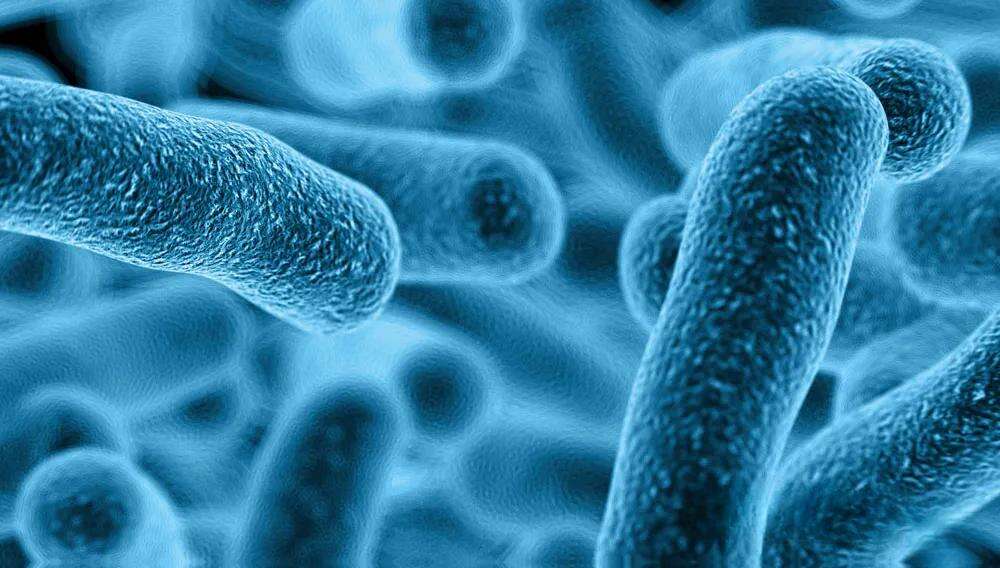
Antimicrobial peptides produced via fermentation overcome resistance through synergistic mechanisms, building an insurmountable barrier. Their core bactericidal mechanism involves physically inserting into the bacterial lipid bilayer, causing membrane thinning, defects, and eventual collapse during cell division.
This biophysical damage does not rely on specific binding sites; a single point mutation cannot confer significant resistance. For a pathogen to adapt, it would need a complete remodeling of its membrane lipid composition, making evolutionary resistance extremely difficult. Even if a few bacteria acquire full defense capabilities, their "specialized form" would likely be metabolically inefficient and outcompeted by normal strains in natural environments without drug pressure, thereby inhibiting the ecological spread of resistant bacteria.
4. The Rebirth of Traditional Peptide Drugs
Fermentation technology provides a new path to reverse the failure of traditional peptide drugs. Polymyxin B, a classic treatment for multidrug-resistant Gram-negative bacteria, has limited application due to nephrotoxicity and resistance. Researchers used fermentation optimization to remove its lipid tail while retaining its ability to bind LPS and displace Mg²⁺ ions. This transformed it from a direct-killing "torpedo" into a membrane-disrupting "battering ram," helping traditional antibiotics like rifampicin and macrolides penetrate the bacterial outer membrane and restoring their activity while significantly reducing toxicity.
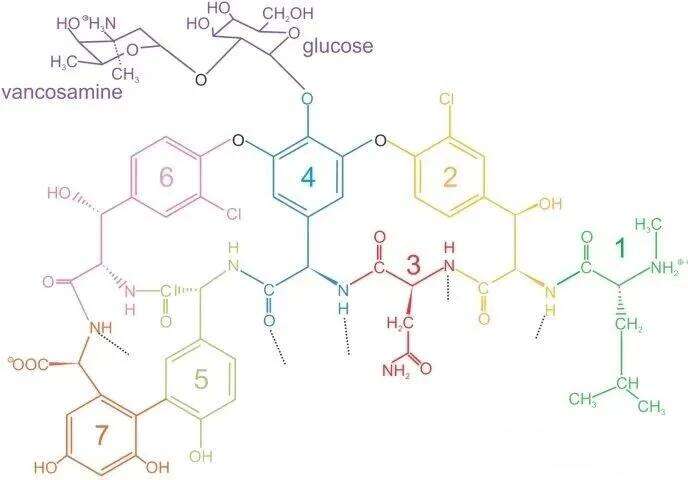
Similarly, breakthroughs have been made in modifying Vancomycin. Vancomycin traditionally binds to the D-Ala-D-Ala terminus of peptidoglycan precursors. Resistant bacteria (VanA/B types) change this terminus to D-Ala-D-Lac, reducing hydrogen bonding and rendering the drug ineffective. Using fermentation technology, researchers attached a hydrophobic lipid tail to Vancomycin, anchoring it to the bacterial membrane and creating a high-concentration microenvironment near the target. Even with weakened hydrogen bonding, the high local concentration effectively interferes with cell wall synthesis, reversing resistance.
5. An Efficiency Revolution Across the R&D Lifecycle
Fermentation technology integrates lead compound optimization, toxicology studies, and GMP commercial production into a continuous R&D process, drastically reducing costs. After verifying the production strain's DNA sequence, subsequent operational costs primarily stem from inexpensive culture media components (carbon sources, nitrogen sources, inorganic salts), eliminating the need for costly coupling reagents and toxic solvents.
In terms of time, fermentation technology breaks the core bottleneck of drug development. Microbiologists can monitor turbidity to quickly assess strain growth, harvest data the next day, and proceed to the next iteration. This creates a low-cost, high-frequency R&D rhythm that not only boosts innovation but also shortens the development cycle within the patent protection period, helping companies seize market opportunities and respond promptly to clinical resistance needs.
In the global crisis of antibiotic resistance, microbial fermentation technology is driving a paradigm shift in peptide drug R&D. It not only solves the technical and cost pain points of traditional chemical synthesis but also builds a dynamic technical system to counter the evolution of resistance, turning the fermenter into a "foundry" where humans seize the initiative. As gene editing, directed evolution, and fermentation processes deepen their integration, peptide drugs will play an even more central role in combating resistance, providing sustainable therapeutic solutions for the post-antibiotic era.