
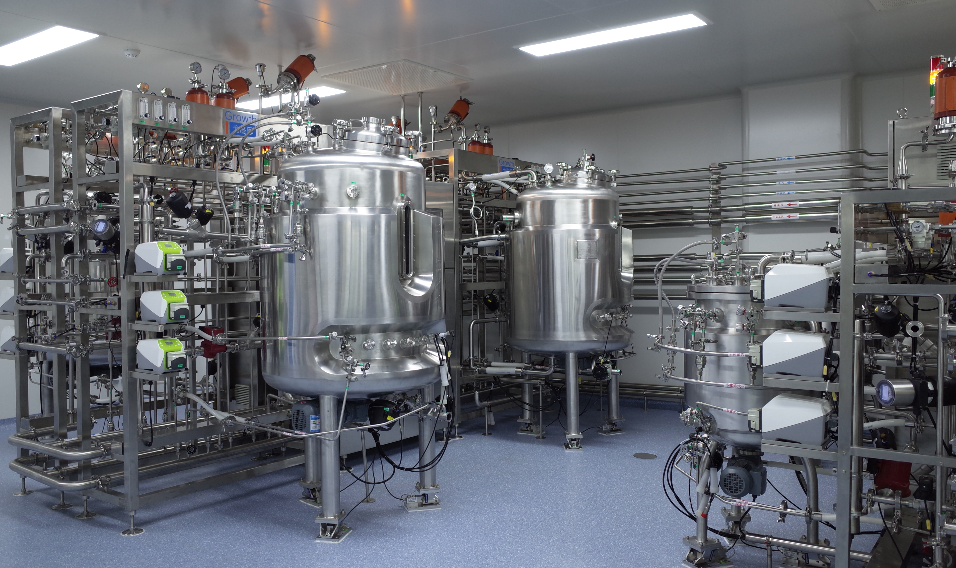
What Is the Difference Between a Fermenter and a Bioreactor in Bioprocessing?
In bioprocessing circles, the words "fermenter" and "bioreactor" show up constantly — sometimes used interchangeably, sometimes as if they describe entirely different machines. Procurement teams, process engineers, and production managers all face the same question when specifying equipment: does the label on the tank actually change what the vessel can do? Getting the terminology right matters because it shapes how a system is designed, validated, and ultimately operated under GMP conditions. A fermenter built for one purpose might not meet the control requirements of a cell culture process, and a bioreactor specified without understanding the microbial workload could end up over-engineered and unnecessarily expensive.
Understanding the Core Distinction Between Fermenters and Bioreactors
What Exactly Is a Fermenter?
A fermenter is a closed vessel designed specifically for cultivating microorganisms — bacteria, yeast, fungi — under controlled conditions to produce a target metabolite. The term comes directly from the fermentation process, where microbes convert substrates into products like ethanol, organic acids, antibiotics, or recombinant proteins. In a typical stainless steel fermenter, the focus is on supporting rapid microbial growth: high agitation rates, aggressive aeration through spargers, and internal cooling coils or jackets to handle the substantial metabolic heat generated by dense bacterial cultures. Design pressures and seal specifications are engineered around the oxygen transfer demands that fast-growing prokaryotic cells require. The headspace volume, impeller geometry, and baffle configuration inside a fermenter all trace back to one central goal — maximizing biomass and product yield from a microbial population.
What Defines a Bioreactor in Bioprocessing?
A bioreactor, by comparison, is the broader category. Any enclosed vessel that supports a biological reaction — microbial, mammalian, insect cell, plant cell, or even enzymatic — qualifies as a bioreactor. This means every fermenter is a bioreactor, but not every bioreactor is a fermenter. A mammalian cell culture bioreactor, for instance, operates at much lower agitation speeds because animal cells lack cell walls and shear forces can rupture them. Sparging strategies shift from coarse bubble injection to microbubble or even membrane-based oxygenation to avoid foam and cell damage. Bioreactors used for adherent cell growth incorporate microcarriers or fixed-bed geometries that a microbial fermenter would never need. The distinction sits in the biological system being cultivated — not in the hardware alone. Understanding this hierarchy helps procurement teams avoid ordering a system that fits the wrong biological workload.
Technical Design and Control Architecture
Vessel Design, Materials, and Sterility Requirements
Both fermenter and bioreactor vessels in pharmaceutical-grade applications are typically fabricated from 316L stainless steel with electropolished interior surfaces rated to Ra ≤ 0.5 μm or better, following ASME BPE guidelines. The difference emerges in the auxiliary port design and sealing philosophy. A microbial fermenter must handle positive pressure during sterilization-in-place cycles at 121–135°C, with double mechanical seals on the agitator shaft to prevent contamination ingress during high-speed mixing. Bioreactors for mammalian culture often operate at lower pressures but demand more sampling and feed ports because perfusion and fed-batch protocols involve multiple liquid addition lines running simultaneously. Sterilization boundaries, aseptic connection points, and drain valve selection all follow the specific contamination risk profile of the organism being grown — bacteria versus mammalian cells versus viral production platforms each bring different sterility assurance requirements.
Monitoring, Control, and Automation Systems
Process control on a modern fermenter centers around parameters that drive microbial metabolism: dissolved oxygen cascading to agitation and gas flow, pH regulation through acid and base pumps, temperature via jacket or coil cycling, and foam sensing with antifoam addition. Redundancy in these control loops matters, because a failed DO probe during a high-cell-density E. coli run can cause the culture to crash within minutes. A cell culture bioreactor adds online capacitance or viable cell density probes, glucose and lactate monitors, and sometimes Raman spectroscopy for real-time metabolite tracking — sensors that a basic microbial fermenter might not need. FDA 21 CFR Part 11 compliance for electronic records and audit trails is equally critical for both system types, since batch records must prove that every control action during the run was executed as programmed. Selecting a control platform that supports both microbial and cell culture recipes gives a facility flexibility as its pipeline evolves.
Application, Selection, and Practical Decision-Making
A Biopharmaceutical Scale-Up Case
A mid-sized biopharmaceutical CDMO in the Midwest United States was scaling a monoclonal antibody process from a 5 L bench-top glass bioreactor to a 200 L single-use pilot system. The initial transfer failed — titers dropped by roughly 40% compared to small-scale results. Investigation revealed that the mixing strategy had been inherited from the company's older microbial fermenter platform. Impeller tip speeds were too high, causing unacceptable shear damage to the CHO cells. The dissolved oxygen control cascade was programmed with the same aggressive PID parameters used for E. coli fermentation, creating oscillating oxygen levels that stressed the mammalian culture. After reconfiguring the impeller to a low-shear marine-blade geometry, reducing agitation to 80–100 rpm, and switching to a microsparger for gentler oxygenation, the process recovered to within 5% of bench-scale titers within three runs. The lesson was straightforward: hardware designed around a fermenter mindset does not translate directly to mammalian cell culture without rethinking the control strategy and fluid dynamics.
Key Factors When Selecting the Right Equipment
When a team sits down to specify a fermenter or bioreactor, the first question is not about tank volume — it is about the organism. Microbial processes demand high oxygen transfer capacity, rapid heat removal, and robust foam control. Mammalian processes require gentle mixing, precise nutrient feeding, and minimal shear. Beyond biology, the following checklist helps narrow choices:
- Material traceability and ASME BPE surface finish documentation
- CIP and SIP validation packages covering worst-case cold spots
- Instrumentation compatibility with the process control software already in use
- Port count and configuration for current and future process additions
- Agitator motor sizing sufficient for the highest expected viscosity
- Single-use versus stainless steel — driven by campaign flexibility and cleaning validation burden
Asking these questions before engaging with equipment vendors shortens the evaluation cycle and reduces the risk of ordering a system that needs retrofitting six months later.
Maintenance and Operational Best Practices
A fermenter in daily production service accumulates wear in predictable ways. Mechanical seals on the agitator should be inspected at least quarterly — a small leak that goes unnoticed can introduce contamination that wipes out an entire batch weeks into a run. pH and DO probes drift over time and need scheduled recalibration against known standards every few cycles, not just when readings look suspicious. Elastomeric O-rings and gaskets on port connections degrade with repeated steam sterilization and should be replaced on a preventive schedule rather than waiting for a failure. For single-use bioreactors, the focus shifts to bag integrity testing, tubing weld quality, and sensor calibration before each campaign. Training operators to recognize early signs of seal wear, probe drift, or jacket fouling prevents most unplanned downtime. A preventive maintenance log tied to batch numbering makes it straightforward to correlate equipment events with process deviations during investigations.
FAQ and Partner Selection
Frequently Asked Questions
Can a fermenter be used for cell culture?
A standard microbial fermenter is generally not suitable for mammalian or insect cell culture without significant modification. The impeller geometry, agitation speed range, and sparger type are optimized for robust microorganisms that tolerate high shear. Attempting to grow CHO or HEK293 cells in an unmodified fermenter typically results in low viability from mechanical damage and inadequate oxygen delivery at gentler mixing speeds.
Why do some manufacturers label everything as a bioreactor?
Many equipment manufacturers use "bioreactor" as the umbrella term because it covers a wider product range — microbial, cell culture, single-use, and hybrid systems — under one marketing category. This simplifies their catalog but can obscure the specific engineering differences that matter for a given process. Buyers should ask for the intended organism type and validated performance data rather than relying on the product name alone.
What standards apply to fermenter and bioreactor construction?
ASME BPE provides the primary standard for bioprocessing equipment design, covering surface finish, material selection, welding, and cleanability. GMP regulations enforced by the FDA and EMA govern how the equipment must be operated, cleaned, and documented. ISO 9001 covers the manufacturer's quality management system. Together, these standards ensure that a fermenter or bioreactor meets the safety and quality expectations of regulatory inspectors.
How do single-use and stainless steel fermenters compare?
Single-use bioreactors eliminate cleaning validation and reduce turnaround time between batches, which works well for multi-product facilities. Stainless steel fermenter systems handle higher pressures and temperatures, support more aggressive cleaning cycles, and typically offer lower long-term consumable costs for dedicated single-product lines. The choice depends on campaign diversity, facility infrastructure, and lifecycle cost modeling.
What size fermenter is right for pilot-scale development?
Pilot-scale fermenter sizing depends on the downstream capacity and the amount of material needed for formulation studies, stability testing, and early clinical supplies. Common pilot volumes range from 30 L to 200 L for microbial processes and 50 L to 500 L for cell culture. Selecting a size that generates enough material without excessive waste is the practical balance most development teams aim for.
How often should pH and DO probes be recalibrated?
In a production fermenter, pH probes typically need recalibration after every batch or every two to three batches, depending on run length and probe quality. Dissolved oxygen probes can often go longer — up to five or six cycles — if the polarization is maintained between runs. Drift that exceeds 0.1 pH units or 5% DO saturation between scheduled calibrations signals that a probe is reaching end of life and should be replaced proactively.
What causes foam buildup in a fermenter and how is it controlled?
Foam in a microbial fermenter comes from proteins and surfactants released by cells combined with the mechanical action of agitation and sparging. Left uncontrolled, foam can block exhaust filters, carry over into downstream lines, and create a contamination pathway. Mechanical foam breakers and antifoam agents dosed through peristaltic pumps are the standard control method, with foam sensors positioned at a defined headspace level to trigger addition.
How long does it take to install and qualify a new fermenter system?
A typical stainless steel fermenter installation — from factory acceptance testing through site delivery, mechanical installation, utility connection, and IQ/OQ execution — takes roughly 12 to 20 weeks depending on site readiness and utility availability. Process qualification and first engineering runs add another 4 to 8 weeks. Single-use systems can be operational in 6 to 10 weeks since they bypass much of the clean-in-place and sterilize-in-place qualification work.
Choosing a Reliable Bioprocessing Equipment Partner
Selecting the right equipment partner for bioprocessing vessels involves looking beyond the specification sheet. A supplier with documented engineering experience across both microbial fermenter and cell culture bioreactor platforms brings practical insight that shortens project timelines. Manufacturing capabilities that include in-house ASME BPE-qualified welding, electropolishing, and factory acceptance testing under process-like conditions reduce reliance on third-party subcontractors and improve quality traceability. Global supply chain capability matters when replacement parts, additional vessels, or expansion modules are needed months or years after the initial installation — a partner with established logistics can deliver components without project-disrupting lead times. Customization flexibility, from port layout modifications to control system integration with existing plant-wide SCADA platforms, allows the equipment to fit the process rather than forcing the process to adapt to off-the-shelf limitations. RITAI brings focused engineering experience in bioprocessing vessel manufacturing, supporting pharmaceutical and biotech clients with systems designed around each facility's specific organism, scale, and regulatory environment.