
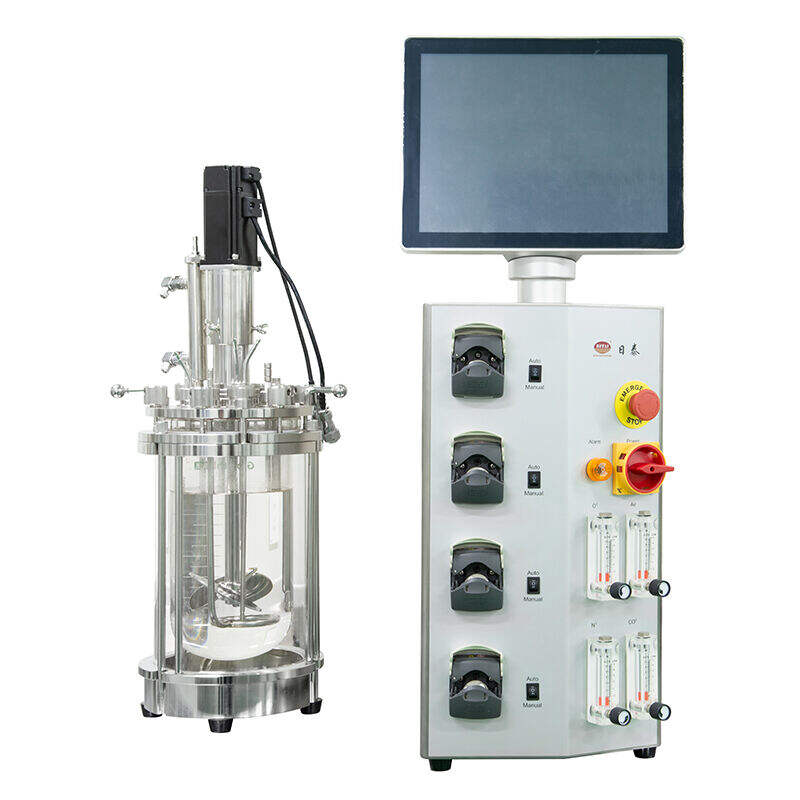
Navigating Bio-Manufacturing Risks and Contamination Vulnerabilities
The Hidden Threats of Microbial Adherence in a Stainless Steel Bioreactor
Maintaining absolute sterility within commercial cell propagation networks requires an ongoing commitment to uncovering hidden mechanical errors before they lead to ruined batches. In industrial biotechnology applications, selecting the wrong material of construction for a vessel can lead to catastrophic financial and operational failure. Choosing a high-quality stainless steel bioreactor serves as the foundational defense against unwanted bio-burden accumulation, unpredicted cell mutations, and batch cross-contamination. When processing dense cellular structures or aggressive microbial broths, the internal container surfaces face continuous exposure to complex chemical mixtures, metabolic organic acids, and enzymes. If a material exhibits even microscopic surface porosity or rough structural grains, organic matrices can quickly anchor themselves into these microscopic crevices. This creates a highly resilient biofilm layer that effectively shields harmful bacteria from clean-in-place procedures, turning subsequent processing cycles into major contamination risks.
Analyzing the Structural and Financial Risks of Engineering Defects
A major oversight among pharmaceutical procurement managers is evaluating container hardware based on initial acquisition costs rather than life-cycle material integrity. Low-grade structural vessels or single-use plastic configurations frequently introduce major mechanical vulnerabilities into high-pressure upstream processing pipelines. Standard materials without optimized electropolished treatments are prone to micro-pitting corrosion when exposed to continuous chloride flushes or high-temperature steam sterilization cycles. This structural degradation creates small physical voids where active ingredients or proteins can degrade, causing unexplained drops in overall product purity. For industrial bioprocessors managing large mammalian cell cultures, a single structural breach or pinhole leak results in immediate product rejection, expensive down-time, and lost validation credentials. Utilizing materials that possess robust mechanical strength and exceptional thermal stability safeguards high-value commercial batches and helps maintain predictable production timelines across entire facility pipelines.
Real-World Biopharmaceutical Facility Contamination Analysis
Practical application in commercial bioprocessing demonstrates the critical importance of installing certified processing infrastructure. A mammalian cell cultivation facility producing monoclonal antibodies updated its upstream manufacturing equipment after a comprehensive validation audit revealed repetitive microbial contamination linked to surface imperfections in a legacy reactor system. The facility had been suffering from irregular yield drops and frequent batch failures during long-term perfusion runs, which disrupted downstream purification schedules. The operations managers decided to phase out the compromised inventory and integrate a custom stainless steel bioreactor designed with an ultra-smooth, electropolished internal surface finish. Three months after implementing this structural upgrade, a routine quality review showed a complete elimination of bio-burden failures across the production floor. Even during continuous, high-density cultivation cycles, the updated system maintained perfect sterility and consistent protein expression, preventing costly raw material losses and protecting strict commercial supply agreements.
Technical Mechanics of Surface Passivation and Material Geometry
The Metallurgy Behind Chromium Oxide Passivation Layers
Achieving consistent bioprocess performance requires strict adherence to advanced metallurgy principles and precise surface chemistry requirements. Professional-grade processing vessels rely heavily on specific austenitic steel alloys, primarily 316L grade, containing precise concentrations of chromium, nickel, and molybdenum. The underlying magic of a premium stainless steel bioreactor stems from its self-healing passive layer, which is a microscopic layer of chromium oxide that naturally forms on the surface of the metal. During production, the fabricated steel undergoes chemical passivation treatments using nitric or citric acid solutions to remove free iron from the surface layer, leaving a chromium-rich matrix. This ultra-thin barrier isolates the underlying raw iron from corrosive process chemicals and dissolved oxygen, preventing rust formation and ensuring no trace metal ions leach into the delicate cell culture medium where they could alter cellular metabolism.
Electropolishing Dynamics and Roughness Average Requirements
To eliminate the microscopic valleys and peaks that naturally occur during mechanical grinding or welding phases, the internal surfaces of a bio-vessel must undergo advanced electrolytic profiling. This chemical process, known as electropolishing, utilizes a high-intensity electrical current and a specialized acid bath to selectively dissolve surface high spots on the metal plate. Industrial standards mandate a maximum roughness average (Ra) of 0.4 micrometers (15 micro-inches) or lower for all product-contact components. Achieving this mirror-like smoothness completely alters the fluid dynamics near the container wall, allowing cleaning agents and rinsing liquids to flow smoothly across the entire face without experiencing turbulent resistance or leaving trace chemical residues. This ultra-smooth surface profile facilitates rapid, repeatable cleaning cycles and ensures absolute batch-to-batch separation using a standardized stainless steel bioreactor setup.
Compliance Frameworks and Bioprocess Equipment Design Standards
Navigating international procurement for biopharmaceutical manufacturing requires strict alignment with global engineering benchmarks and regulatory compliance protocols. Industry validation guidelines, such as the ASME Bioprocessing Equipment (ASME BPE) standards and ISO 13485 quality systems, dictate precise structural parameters for vessel geometry, weld quality, and fluid drainage capabilities. These strict regulations mandate that all internal corners must feature smooth, continuous radiused curves to completely eliminate stagnant dead-legs where liquids could pool and escape clean-in-place spray patterns. Furthermore, components must withstand continuous steam-in-place sterilization procedures, enduring repeated thermal shocks up to 121 degrees Celsius or higher without experiencing structural warping, seal failure, or micro-fracturing along welded seams, thereby protecting the sterile boundary over thousands of operating hours.
Strategic Sourcing Frameworks and Lifecycle Equipment Maintenance
Key Evaluation Criteria for Industrial Bioprocess Sourcing
Selecting a dependable equipment manufacturer requires analyzing precise production tolerances, material tracing procedures, and automated welding validation records rather than chasing low-cost alternatives. Quality assurance specialists must verify that a supplier provides comprehensive material test reports (MTRs) for every steel plate utilized, verifying exact chemical compositions and heat-treatment origins. The manufacturing process should utilize automated orbital welding equipment, which delivers completely uniform weld penetration and eliminates the human variability that often leads to internal porosity or weld slag defects. Sourcing teams should also review the supplier's validation capabilities, prioritizing engineering companies that offer complete factory acceptance testing (FAT) documentation, which streamlines the subsequent on-site installation and operational qualification processes required by local drug regulatory agencies.
Preventive Maintenance Routines and Surface Integrity Audits
The long-term safety and operational defensive capabilities of a sterile cultivation system depend heavily on structured preventive maintenance schedules and objective diagnostic inspections. Over months of continuous operation, exposure to aggressive sanitization chemicals or mechanical stress can degrade the protective passive layer, potentially leading to rouge formation, which is a specialized form of iron oxide contamination. Plant operators should implement routine chemical testing procedures, such as colorimetric testing or electrochemical polarization measurements, during scheduled plant maintenance windows to evaluate the thickness and stability of the passive film. Any container showing early signs of surface oxidation must undergo immediate re-passivation treatments to restore the chromium oxide balance, keeping the processing infrastructure operating at maximum structural efficiency and absolute safety.
Choosing a Reliable Storage Solution Partner
Building a highly resilient and scalable biopharmaceutical manufacturing network requires a dependable engineering partner capable of delivering consistent material quality and steady global supply chain support. Sourcing processing infrastructure from producers with deep metallurgy expertise and advanced fabrication capabilities ensures that every deployed asset performs reliably under heavy daily production loads. This is where aligning with an established global manufacturer like RI TAI provides exceptional long-term value. With sophisticated production infrastructure and a strong focus on precise quality management, RI TAI consistently provides durable stainless steel bioreactor systems designed to meet rigid international safety and ASME BPE engineering protocols. Partnering with a globally integrated manufacturer gives biotechnology enterprises reliable access to a robust equipment catalog, steady technical support, and consistent construction quality that keeps production lines moving smoothly year after year.
Frequently Asked Questions
What makes a stainless steel bioreactor the preferred choice for commercial bioprocessing?
A certified stainless steel bioreactor is highly valued because its austenitic alloy structure provides exceptional resistance to corrosion, high thermal stability during steam sterilization, and an ultra-smooth, electropolished surface finish that completely prevents biofilm accumulation, ensuring absolute batch purity and long-term mechanical reliability.
How does the chromium oxide passive layer protect the cell culture from contamination?
The passive layer is an ultra-thin, chromium-rich oxide film that naturally forms on the surface of the steel. It prevents raw iron molecules from interacting with the culture media, effectively blocking rust formation and ensuring that no toxic metal ions leach into the liquid broth to disrupt cellular health.
Why is electropolishing essential for the internal surfaces of processing vessels?
Electropolishing removes microscopic surface irregularities, yielding a smooth roughness average below 0.4 micrometers. This mirror-like profile prevents proteins and bacteria from adhering to the container wall, eliminates dead zones, and allows clean-in-place chemicals to completely sanitize the entire interior space effortlessly.
What international design standards govern the fabrication of bioprocessing equipment?
The primary regulatory frameworks include the ASME Bioprocessing Equipment (ASME BPE) standards and ISO quality systems. These rules dictate precise parameters for weld quality, surface finishes, drainage angles, and component geometry to ensure that the completed vessel can be completely sterilized and validated.
How do operators inspect the internal surface health of a cultivation vessel?
Technicians perform routine physical inspections using specialized surface roughness testers and chemical verification kits to check for rouge formation. Digital surface checks allow safety officers to monitor the health of the passive layer and identify micro-corrosion before it impacts batch sterility.
Can a stainless steel bioreactor handle both microbial fermentation and mammalian cell cultivation?
Yes, these heavy-duty vessels are highly customizable and can be engineered with specific agitating impellers, sparging networks, and temperature jackets to suit either high-oxygen microbial fermentation or shear-sensitive mammalian cell cultivation, making them highly versatile assets for any facility.
What is the exact purpose of a steam-in-place sterilization cycle?
A steam-in-place cycle utilizes pressurized steam at temperatures reaching 121 degrees Celsius or higher to completely sanitize the assembled vessel without dismantling any components. This process destroys all living micro-organisms inside the system, establishing a completely sterile environment for the next cell batch.
How often should a commercial cultivation vessel undergo chemical re-passivation?
Validation specialists recommend performing a comprehensive surface integrity audit annually. If the inspection reveals an imbalance in the chrome-to-iron ratio or signs of rouge accumulation, the vessel should undergo chemical re-passivation using specialized citric or nitric acid solutions to fully restore its corrosion resistance.
Table of Contents
- Navigating Bio-Manufacturing Risks and Contamination Vulnerabilities
- Technical Mechanics of Surface Passivation and Material Geometry
- Strategic Sourcing Frameworks and Lifecycle Equipment Maintenance
- Choosing a Reliable Storage Solution Partner
-
Frequently Asked Questions
- What makes a stainless steel bioreactor the preferred choice for commercial bioprocessing?
- How does the chromium oxide passive layer protect the cell culture from contamination?
- Why is electropolishing essential for the internal surfaces of processing vessels?
- What international design standards govern the fabrication of bioprocessing equipment?
- How do operators inspect the internal surface health of a cultivation vessel?
- Can a stainless steel bioreactor handle both microbial fermentation and mammalian cell cultivation?
- What is the exact purpose of a steam-in-place sterilization cycle?
- How often should a commercial cultivation vessel undergo chemical re-passivation?