The Design of the Fermentor Bioreactor as an Enzyme Production System
Fermentor Design, Enzyme Production, and Enzyme Quality
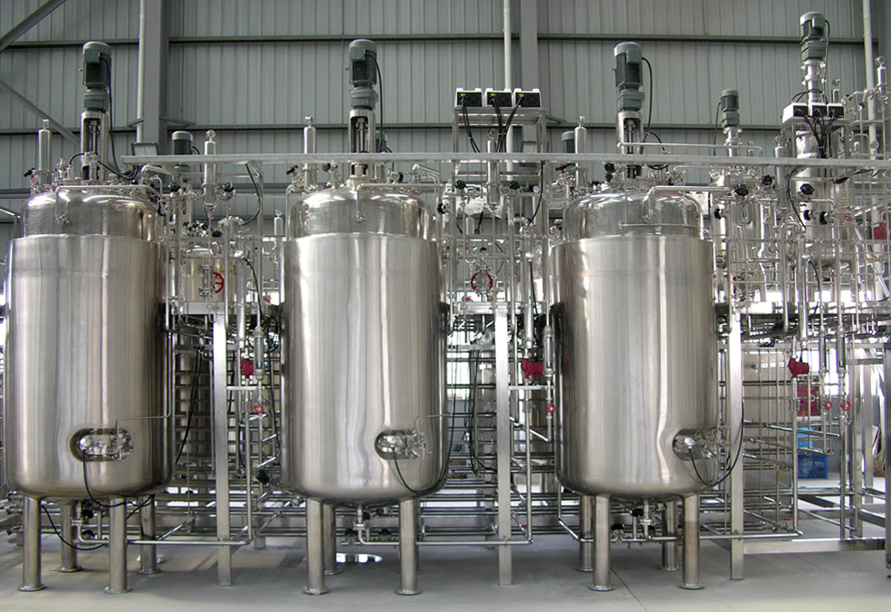
Vessel shape is especially important for the design of fermentors because of the impact it has on control of the fermentor’s internal environment, which is important for the synthesis of target enzymes. In terms of vessel aspect ratio, a taller vessel is better because it can boost dissolved oxygen levels for the microbes that require a lot of oxygen by as high as 30 percent. The vessel material also is important for the integrity of the end product. Most plastics give up their chemicals and enzymes, while borosilicate glass is less likely to. The right choice of impeller can be critical for mixing. For example, a standard Rushton turbine can give 95% mixing uniformity in less than 10 seconds, even with very viscous broths. For optimum production of sensitive enzymes like lipases and proteases, careful control of temperature is necessary to maintain the temperature of the fermentor within 0.5 degrees Celsius. With the necessary controls, modern fermentors with automatic feeding based on pH can maintain yield within 2% which is optimal for production of target enzymes. Taking care to place baffle sensors to avoid dead zones will help eliminate the collection of material that adversely affects the quality of the target enzymes.
Aeration, mixing, and shear stress management in submerged fermentation.
Good submerged fermentation is all about the right tradeoff between the system's oxygen uptake rate, mixing intensity, and the control of the system's associated mechanical stresses. Excess shear stress will break the important mycelial networks, while too little agitation will result in areas that are devoid of oxygen. The sparger pores, which are typically in the 10 - 200 micron range, are of significant importance. Smaller pores lead to greater dispersion of gas and liquid, but also generate increased foaming. For fungal fermentation, the optimal range of volumetric mass transfer rates is in the range of 20 - 150, which is also the range for the greatest fungal growth. These rates are also the range for the greatest growth of the fungal mycelia and the greatest growth of the fungal mycelia and the greatest growth of the fungal mycelia and the greatest growth of the fungal mycelia and the greatest growth of the fungal mycelia. Care is needed in handling the actinomycetes, because they are very brittle at impeller tip speeds greater than 2.5 m/sec. In contrast, the Bacillus strains are best at turbulent flow conditions with baffles but without damaging vortices. Recent innovations in facility design include the use of computational fluid dynamics to identify zones of mechanical stress and design agitation systems for those specific conditions. Special coaxial mixers are needed to manage the non-Newtonian behavior of highly polysaccharide broths. Real-time viscosity measurements allow operators to adjust power input to maintain the desired Casson fluid regime.
When it comes to foam control, many plants choose antifoam agents that are silicone free because they handle foam without disrupting aeration efficiency or inadvertently removing enzymes from solution.
From Lab Strain to Commercial Scale: Fermentor-Driven Process Intensification
Thermostable Enzymes: Batch, Fed-Batch, and Continuous Fermentor Operations
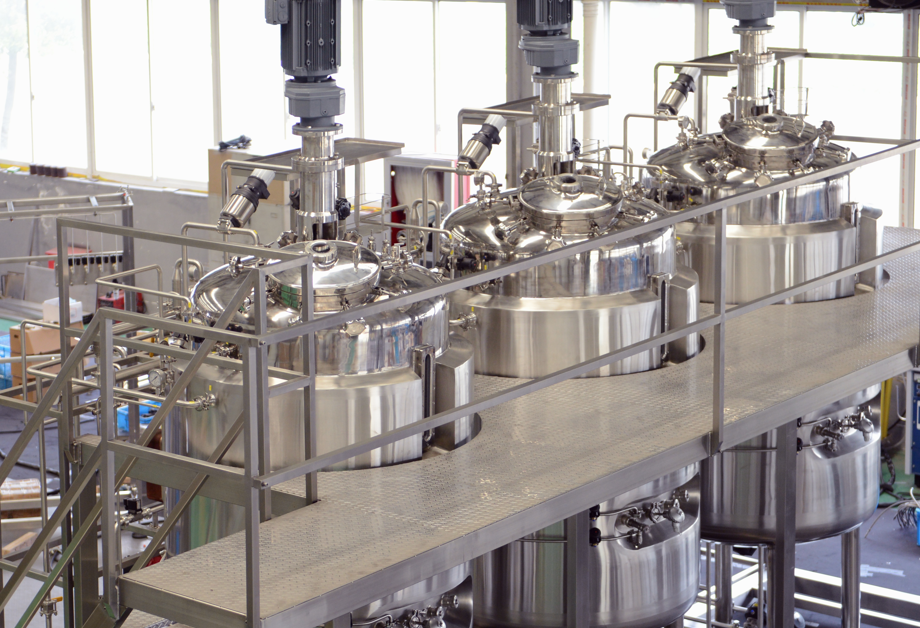
The type of fermentation process selected is significant in determining the quantity of thermostable enzymes that can be produced and also how the process is controlled. While batch systems are the easiest to control and operate, they are also the least productive due to the declining productivity that occurs after the exponential growth phase. This challenge is addressed by the fed-batch operation, in which nutrients are added Gradually to support higher steady state yields. In fact, some bioprocessing literature reports up to 30 to 40 percent higher yields of thermostable enzymes with the fed-batch method when compared to the batch method. Continuous fermentation is ideal for enzymes that are active for longer periods, such as some proteases, as it provides optimum productivity. The downside is that long runs of these systems tend to increase the incidence of contamination. Therefore, most manufacturers strike the best productivity-control balance with fed-batch systems, as they maintain the streamlined production for longer than other methods and provide good control over the rate of metabolism as well as a reduction of risk from contaminated systems.
Real-Time Monitoring with PAT: Providing Better Control of Fermentors and Consistency of Enzymes
Process Analytical Technology (PAT) Provides real-time monitoring of biocatalyst fermentors, including dissolved oxygen, pH, biomass, and multiple other metabolite concentrations. Sensors and feedback systems provide operators with immediate data that allows them to modify aeration, nutrients, and agitation. This type of real-time monitoring and control reduces batch to batch variability by about 25% and improves consistency of production. In case of substrates with thermostable enzymes, the PAT systems are able to identify subtle viscosity changes, which indicates the specific moment of maximal enzyme expression. This allows to optimize and maximize the harvest without over-consumption of the resources. Additionally, the automated feedback controls monitor shear stress and help in preservation of the structural and functional integrity of the produced enzymes. Most importantly, PAT systems are unique in that they capture the multiple control data in measures needed to create closed loop control. This is the key to consistency of enzyme quality, especially when working with scaled production, and also allows to meet GMP (Good Manufacturing Processes) guidelines.
Economic and Regulatory Trade-offs in Selecting Fermentors in GMP Enzyme Production
Single-Use vs. Stainless Steel Fermentors: Considerations on Flexibility, Cost, and Lifecycle Trade-offs
For fermentors, the choice of single-use vs. stainless-steel fermentors involves balancing the assurance of sterility, scalability demands, and life cycle cost considerations under GMP regulations.
Sterility: There can be no cross-contamination in single-use systems as there is no cleaning and sterilization cycle; however, there must be thorough validation of the polymer with respect to extractables and leachables. Stainless steel vessels depend on validated SIP (steam-in-place) and CIP (clean-in-place) on microbial control.
Scalability: Large volume, continuous manufacturing operations are necessary for high-throughput manufacturing, and this is where stainless-steel infrastructure is critical. On the other hand, single-use platforms are better in flexible, multi-product manufacturing where rapid campaign changes and less time on setup are required.
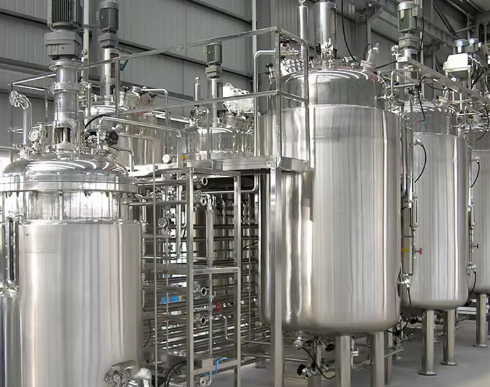
Life cycle cost: Although stainless steel fermentors cost the capital investment of about 40% more than single-use systems, they provide lower operating costs per batch after 5 years; with single-use, the initial costs are lower by about 60%, but the cost of disposables increases quickly—especially at commercial scale—closed batch manufacturing.
Whereas the single-use systems are concerned, it is necessary for companies to manage material documentation throughout the entire production process to test for extractables, which are also classified under GMP guidelines. Metal equipment also requires documentation supporting considerations regarding the equipment’s resistance to corrosion, as well as documentation to confirm that the equipment has been properly polished/finished. Regulators also request complete revalidation to their specific requirements for F, E, and M instruments whenever companies want to increase the metal equipment’s capacity or modify the equipment’s capacity to include the single-use systems. It is clear that companies understand these factors, and the companies that do the best integrated provider audits and “close the loop” quality systems design ahead of time target the ICH Q5A(R2) and USP 665 limited extractables and leachables (el) specifications for process materials with respect to control and specifications.
FAQ
How does the design of a fermentor affect the biosynthesis of enzymes?
The fermentor allows for precise control of the environmental factors that affect the yield and quality of the enzyme produced.
How could submerged fermentation be more effective?
By having a well-balanced control of the aeration, mixing, and applied stresses. Effective control of these factors is important to obtain a desired viscosity, which has a direct influence on the production of enzymes.
What are the differences between batch, fed-batch, and continuous fermentor operations?
All three fermentor operations, Batch, Fed-batch, and Continuous, have their own advantages. Batch systems are straightforward, but productivity drops after the exponential growth phase. Fed-batch systems allow for the addition of nutrients and thus, supports greater yields. Continuous fermentation systems support the most fermentation but do carry a greater risk for contamination. Fed-batch systems seem to be right in the middle for productivity, though they still have greater control.
What is the significance of Process Analytical Technology (PAT) concerning fermentor operations?
Real-time monitoring of process parameters can be used to make the required adjustments to comply with GMP and maintain the required level of consistency in the production of enzymes.
What are the advantages and disadvantages of single-use fermentors and stainless-steel fermentors in the manufacture of enzymes?
Single-use fermentors are less expensive at the beginning, but each batch has a greater cost, compared to stainless-steel fermentors, which have a greater initial cost but become less expensive after a greater number of batches, in addition to allowing greater scalability for more economical high-throughput manufacturing.